
What environmental challenges does Tajikistan face?
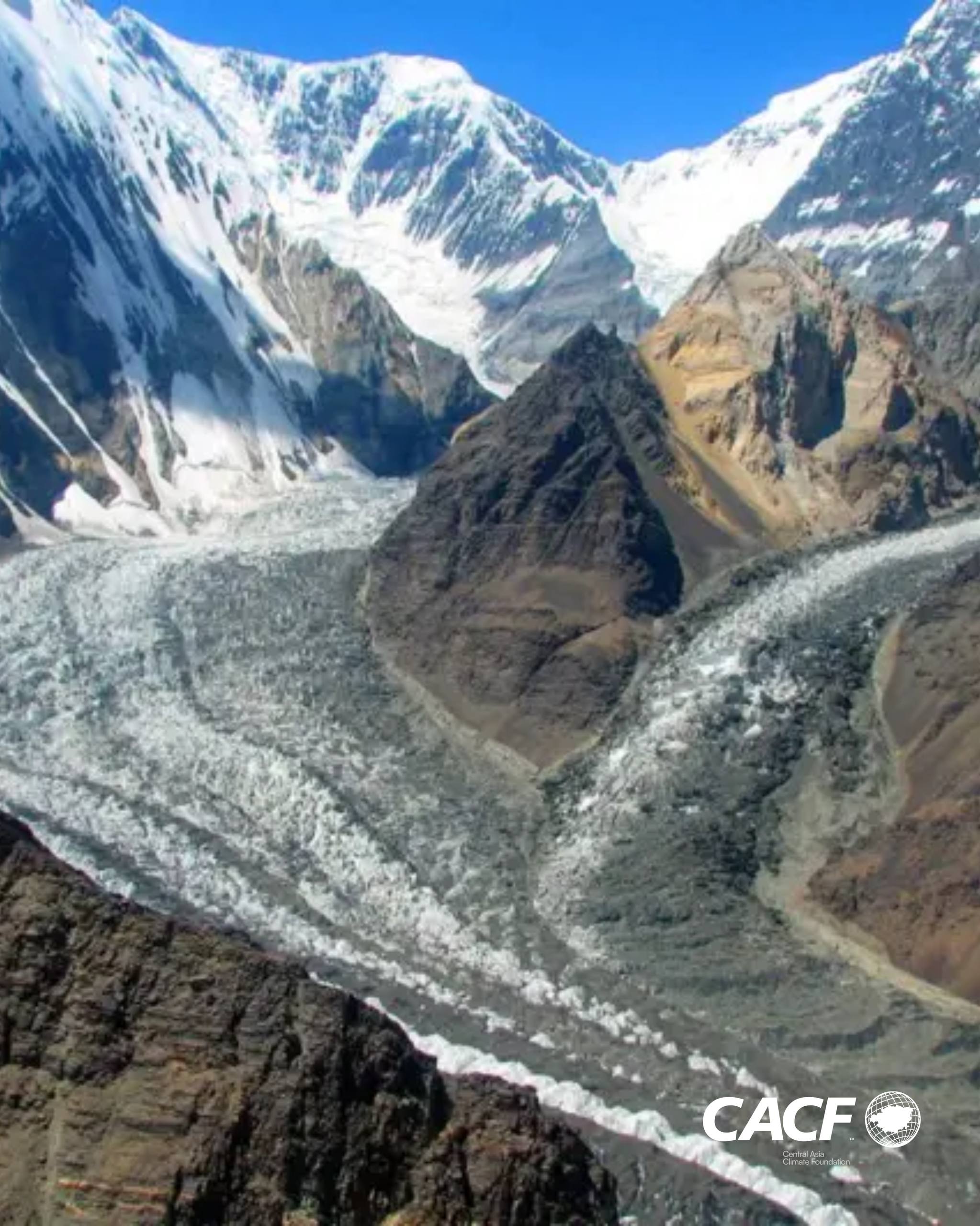
Ahead of the Regional Ecological Summit 2026, experts from the Project Office for Central Asia on climate change and green energy of the Central Asian Climate Fund (CACF) analyzed environmental challenges in Tajikistan. It is the smallest country in the region by area, with mountains covering 93% of its territory–where the main threat is emerging. Intensive glacier melt in the future will lead to water shortages not only in Tajikistan, but also in neighboring countries.
Glacier melt in Tajikistan is a critical environmental issue driven by climate change. Temperature increase in the region is occurring twice as fast as the global average. In addition, increasingly frequent dust storms reduce the reflectivity (albedo) of ice.
Over the past 70–100 years, glacier area has decreased by about 30%, and the number of glaciers has fallen by more than 1,000. Some glaciers, such as Vandzhyakh, lose more than 16 meters in length per year, while the Yakarcha Glacier has lost 4 meters in thickness over two years.
According to expert projections, by 2050 more than 50% of glaciers may disappear, threatening water access for tens of millions of people. It is in the Pamir Mountains that Central Asia’s second-largest river–the Amu Darya–is formed. Considering that the largest river, the Irtysh, flows in eastern Kazakhstan, the Amu Darya serves as a lifeline for three countries in the region: Tajikistan, Turkmenistan, and Uzbekistan.
In addition, the risks of glacial lake outburst floods and mudflows increase every year.
Despite its rich water resources, Tajikistan is already facing a serious shortage of drinking and irrigation water, affecting more than half of the population. The main causes are outdated infrastructure, a lack of pumping stations, the impacts of climate change, and population growth. By some estimates, more than 40% of the country’s residents do not have access to safe-quality water, and in some areas this figure is below 20%. Irrigation water shortages force agricultural land out of production.
Failures of water pumping stations and the разрушение of irrigation systems, inefficient irrigation methods (leading to salinization), deforestation (including the use of fuelwood under conditions of energy shortages), overgrazing, and improper soil cultivation–together with increasing aridity–lead to land degradation. This is a critical environmental and economic problem: about 70–80% of arable land is affected by erosion and salinization, threatening food security and contributing to forced migration.
Tajikistan also faces a serious environmental threat inherited from the Soviet period: about 55 million tons of radioactive waste spread across 170 hectares, mainly in the north of the country. The greatest danger comes from tailings storage facilities in the city of Istiqlol and the village of Dehmoy, where aging infrastructure and natural factors (earthquakes) threaten soil and water contamination.
Municipal solid waste is another pressing issue: more than 9 million tons of waste are generated annually, while over 83% of plastic waste (about 267 thousand tons) is not recycled and is instead sent to landfills, contaminating soil and water. The main causes are the absence of separate collection, insufficient recycling capacity, illegal dumping, and weak waste management infrastructure.
At the same time, Tajikistan is among the countries with critically high levels of air pollution, exceeding the standards recommended by the World Health Organization by 7–10 times. The main causes include an aging vehicle fleet, industrial emissions, the use of coal/wood for heating, and dust storms. High concentrations of PM2.5 in the air contribute to cardiovascular disease and strokes.
These challenges are intensified by population growth and the economy’s high dependence on natural resources.
The authorities of Tajikistan are working to improve access to drinking water, introduce water-saving technologies and sustainable agricultural practices, and enhance land resource management. However, project implementation is constrained by a lack of funding.
As previously reported, the Regional Ecological Summit will be held in Astana on 22–24 April 2026, where the challenges facing Central Asian countries and ways to address them will be discussed.
