
Eleven settlements in Kazakhstan recorded high air pollution levels in 2025
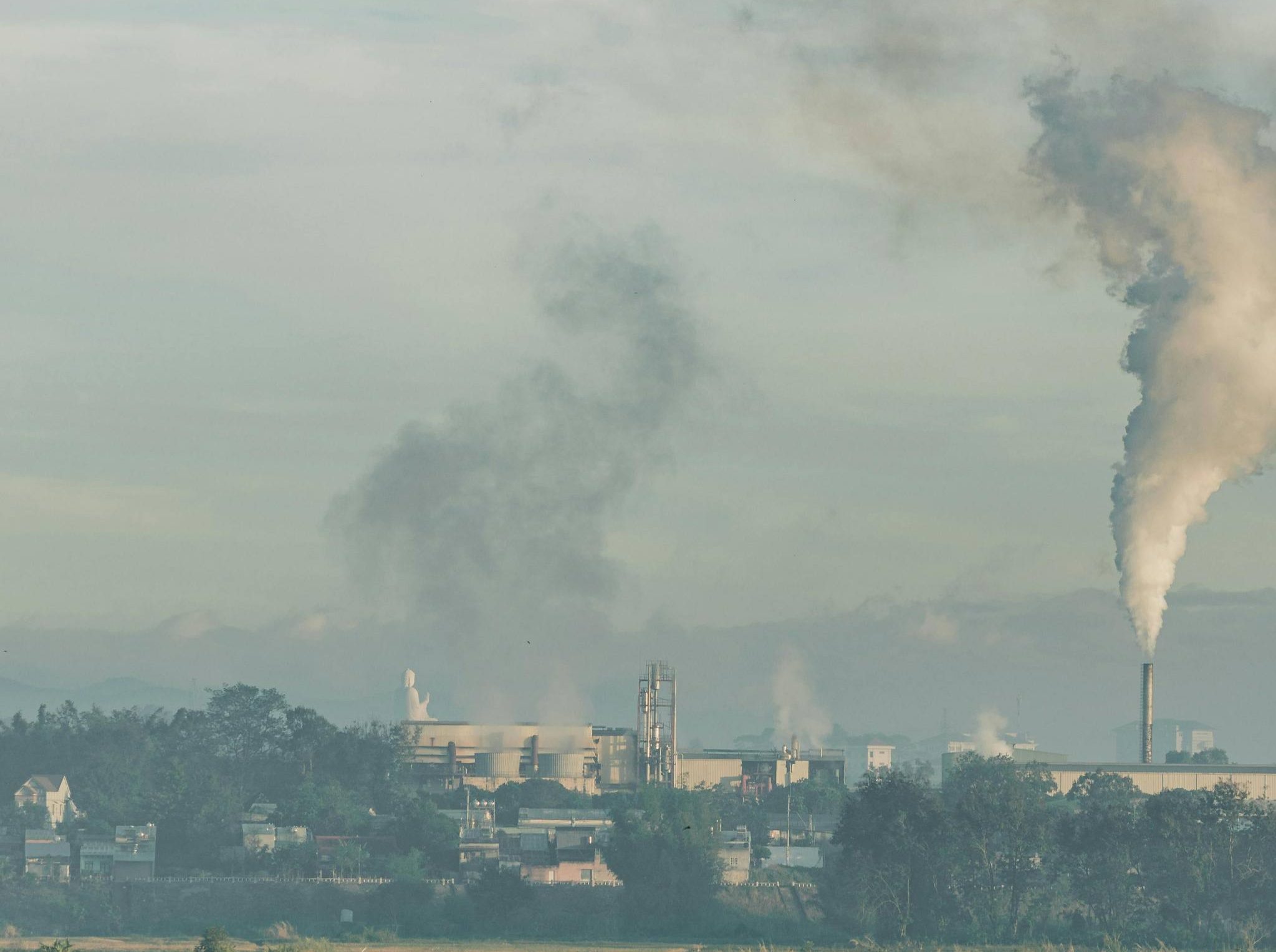
At the end of 2025, high and very high levels of atmospheric air pollution were recorded in 11 settlements across Kazakhstan, with thousands of cases of exceedances of maximum permissible concentrations of harmful substances. Astana was removed from the list of cities with poor air quality, while Turkestan was included for the first time.
Experts from the Project Office for Central Asia on climate change and green energy of the Central Asian Climate Fund (CACF) analyzed atmospheric air monitoring data collected by RSE “Kazhydromet” in 2025. In total, monitoring covered 70 settlements: 32 were classified as having a low level of pollution, 27 as having an elevated level of pollution, and 11 as having a high or very high level of pollution.
A low level of atmospheric air pollution was recorded in the cities of Aktau, Ridder, Semey, Kokshetau, Uralsk, Aksai, Taldykorgan, Atbasar, Shchuchinsk, Karatau, Zhanatas, Stepnogorsk, Balkhash, Saran, Kostanay, Rudny, Pavlodar, Petropavlovsk, Ekibastuz, Aksu, as well as in the settlements of Aiteke Bi, Burabay, Bestobe, Glubokoye, Auezovo, Korday, Sastobe, Toretam, Akai, Beineu, Aksu, and Shieli.
An elevated level of atmospheric air pollution was recorded in the cities of Ust-Kamenogorsk, Zhezkazgan, Atyrau, Kulsary, Shymkent, Ayagoz, Shemonaikha, Altai, Zhitikara, Lisakovsk, Arkalyk, Astana, Zharkent, Zhanaozen, Kyzylorda, Taraz, Shu, Kandyagash, Aralsk, Khromtau, Kentau, as well as in the settlements of Burlin, Kyzylsai, Ganyushkino, Inderborsky, and Karabalyk, and the village of Makat.
High and very high levels of atmospheric air pollution were recorded in the cities of Karaganda, Temirtau, Satpayev, Abay, Aktobe, Almaty, Talgar, Turkestan, as well as in the settlements of Shubarkshi and Kenkiyak, and the village of Zhanbay.
In Karaganda, more than 40.5 thousand cases of exceedances of maximum permissible concentrations (hereinafter – MPC) of air pollutants were recorded in 2025. These included 31,460 cases for suspended particles PM2.5, 5,161 cases for suspended particles PM10, 1,709 cases for hydrogen sulfide, 1,124 cases for carbon monoxide, 284 cases for nitric oxide, 753 cases for suspended particles (dust), 63 cases for phenol, and 1 case for nitrogen dioxide. In addition, over 35 days last year, one monitoring station recorded 240 instances of high pollution for suspended particles PM2.5 (10–27.4 MPC) and 19 instances of high pollution for suspended particles PM10 (10.4–14.7 MPC).
In Temirtau, the main contributors to atmospheric air pollution were: phenol (863 cases of MPC exceedances), hydrogen sulfide (585 cases of MPC exceedances), dust (137 cases of MPC exceedances), carbon monoxide (121 cases of MPC exceedances), nitrogen dioxide (110 cases of MPC exceedances), and suspended particles PM2.5 (109 cases of MPC exceedances).
In Satpayev, as in Karaganda, tens of thousands of MPC exceedances of air pollutants were recorded in 2025: nitrogen dioxide – 32,268 cases, hydrogen sulfide – 10,195 cases, ozone – 6,288 cases, sulfur dioxide – 747 cases, carbon monoxide – 9 cases.
In the city of Abay, last year 1,227 cases of MPC exceedances were recorded for nitrogen dioxide, 376 for sulfur dioxide, 5 for carbon monoxide, and 2 for ozone.
In Aktobe, the main contributors to atmospheric air pollution were: hydrogen sulfide (813 cases of MPC exceedances), nitrogen dioxide (742 cases of MPC exceedances), carbon monoxide (26 cases of MPC exceedances), nitric oxide (36 cases of MPC exceedances), and sulfur dioxide (25 cases of MPC exceedances). In addition, over three days in September, the city recorded 9 instances of high hydrogen sulfide pollution (more than 10 MPC).
In Almaty, last year 12,309 cases of MPC exceedances were recorded for nitrogen dioxide, 2,749 for nitric oxide, 2,131 for suspended particles PM2.5, 1,704 for sulfur dioxide, 898 for carbon monoxide, 772 for suspended particles PM10, 77 for ozone, 28 for suspended particles (dust), and 1 for benzo(a)pyrene.
In Talgar, the main contributors to atmospheric air pollution were: nitrogen dioxide (11,268 cases of MPC exceedances), sulfur dioxide (3,644 cases of MPC exceedances), carbon monoxide (158 cases of MPC exceedances), and ozone (1 case of MPC exceedance).
At the end of 2025, Turkestan was included for the first time in the list of settlements with high atmospheric air pollution. Two indices were used to assess air quality:
- Atmospheric Pollution Index (hereinafter – API) is an indicator that takes into account the concentrations of several key pollutants and their impact on human health. It uses average daily or average annual concentrations to determine the level of chronic pollution;
- Standard Index (hereinafter – SI) is an indicator of the highest measured one-time concentration of a pollutant divided by its maximum permissible concentration. It helps identify the most significant pollutant at a specific station or in a city and is used to assess short-term air pollution.
According to the stationary monitoring network in Turkestan, the atmospheric air pollution level was assessed as high (API = 8). The highest frequency of MPC exceedances was 43% (high level) for nitrogen dioxide, and SI = 4.9 (elevated level) for sulfur dioxide.
The main contributors to atmospheric air pollution in the city were: nitrogen dioxide (11,450 cases of MPC exceedances), sulfur dioxide (5,701 cases of MPC exceedances), carbon monoxide (122 cases of MPC exceedances), hydrogen sulfide (59 cases of MPC exceedances), and nitric oxide (40 cases of MPC exceedances).
In the settlement of Shubarkshi, last year 3,604 cases of MPC exceedances were recorded for hydrogen sulfide, 1,052 for sulfur dioxide, 14 for nitrogen dioxide, and 2 for carbon monoxide. Over three days during the year, 16 instances of high air pollution for hydrogen sulfide (more than 10 MPC) were recorded.
A similar situation was observed in the settlement of Kenkiyak, where in 2025 there were 3,454 cases of MPC exceedances for hydrogen sulfide, 97 for nitrogen dioxide, 5 for carbon monoxide, and 3 for sulfur dioxide. Over 6 days during the year, 36 instances of high air pollution for hydrogen sulfide (more than 10 MPC) were recorded.
In the village of Zhanbay, the main contributors to atmospheric air pollution were: nitrogen dioxide (6,309 cases of MPC exceedances), hydrogen sulfide (75 cases of MPC exceedances), and carbon monoxide (1 case of MPC exceedance).
As previously reported, the Regional Ecological Summit will be held in Astana on 22–24 April 2026, where the challenges facing Central Asian countries and ways to address them will be discussed. Combating atmospheric air pollution will be one of the key focus areas of the event.
