
Kazakhstan Presented an Approach to Integrating Science and AI to Address Climate Challenges at the Regional Ecological Summit
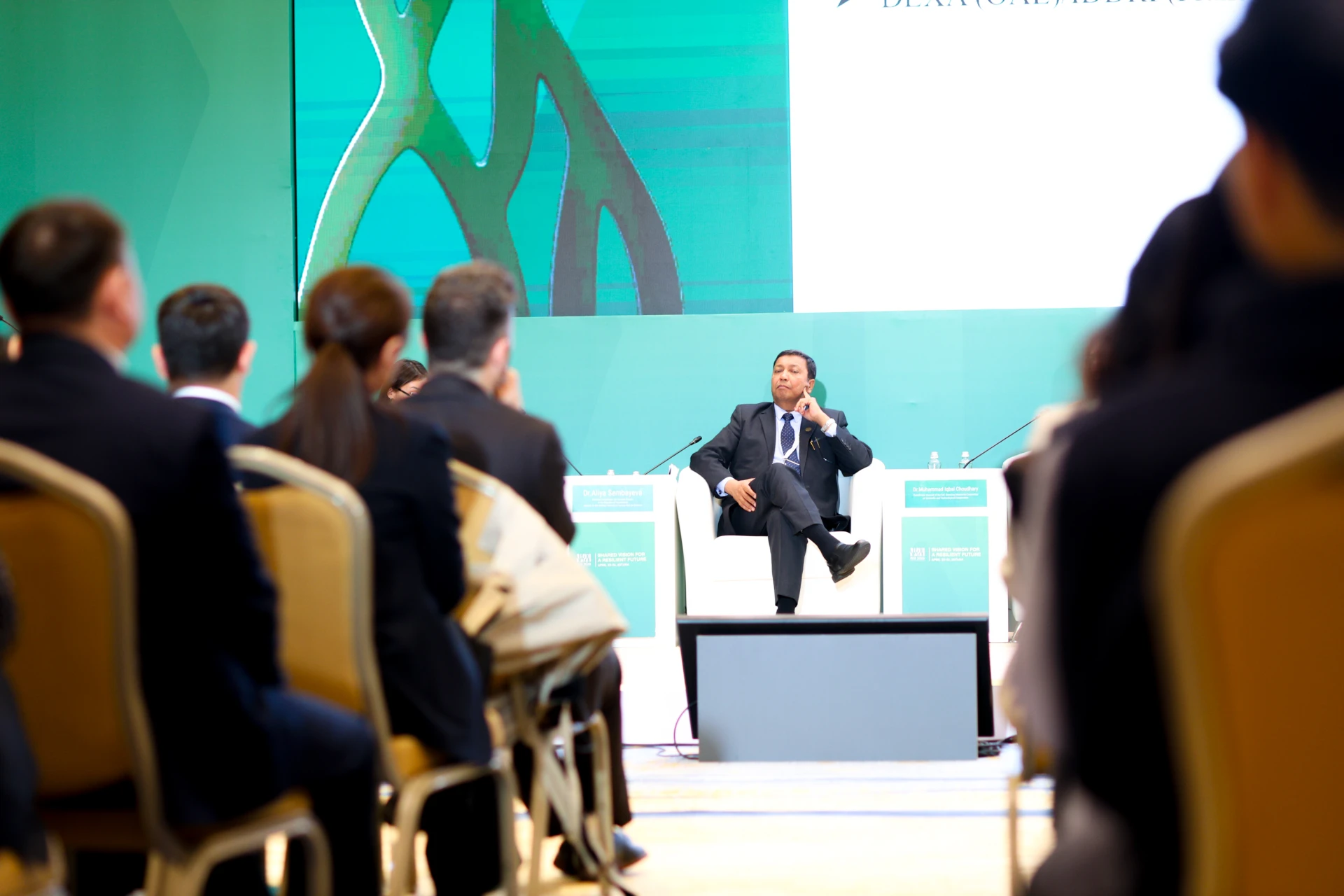
Within the framework of the Regional Ecological Summit, the Minister of Science and Higher Education of the Republic of Kazakhstan spoke at the panel session “The Role of the Academic and Scientific Community in Shaping Regional Climate Solutions,” outlining the country’s key approaches to addressing climate challenges through the development of science, technology, and education.
Opening the session, the Minister emphasized that holding the summit with the support of the Head of State demonstrates the high priority of the ecological agenda for Kazakhstan and the entire Central Asian region.
During the speech, it was noted that the region is among the most vulnerable to climate change. In particular, the accelerated reduction of glaciers and increasing pressure on hydrological systems are already affecting the sustainability of water resources, agriculture, and the economies of the countries in the region.
The Minister underlined that Kazakhstan is placing its bet on science as the foundation for developing effective solutions. The country hosts the Central Asian Regional Glaciological Center under the auspices of UNESCO, and 61 scientific projects are being implemented in the fields of climate, water resources, and sustainable agriculture.
At the same time, particular emphasis was placed on expanding international scientific cooperation. As the Minister noted, modern climate challenges require the synchronization of research agendas, data exchange, and joint work by scientists. Kazakhstani universities and research centers are already actively integrating into global academic networks, implementing joint projects with leading foreign universities and research organizations, and developing partnerships for the creation of laboratories and scientific infrastructure. This work will be systematically strengthened.
Special attention in the speech was given to the role of artificial intelligence. According to the Minister, Kazakhstan views AI not as a privilege but as a tool for expanding capabilities. Today, AI is already being used for climate modeling, early warning systems, and environmental monitoring.
The established national academic computing cluster, involving the country’s leading universities, has a capacity exceeding 40 petaflops, while the commissioned supercomputers with a total capacity of nearly 4 exaflops have become the largest computing infrastructure in Central Asia. Partnerships with international technology companies are also being developed to create cloud-based solutions in the field of ecological analytics.
A separate focus was placed on workforce development. Kazakhstan has become one of the first countries where artificial intelligence has been introduced as a mandatory discipline in universities. As part of the AI-SANA program, around 600,000 students have received AI training in cooperation with leading international companies. The country has also introduced access to modern AI tools for students and researchers, including nationwide use of AI-based educational solutions.
A key task is the formation of an ecological culture through education. Thousands of online courses, including those translated into the Kazakh language, have been integrated into educational programs, contributing to the reduction of educational inequality and the development of digital and ecological literacy.
Kazakhstan is also focusing on the transition from the use of AI to its creation. Students of domestic universities are already developing applied solutions, including for environmental monitoring and resource management. The establishment of the National University of Artificial Intelligence and the formation of a consortium of specialized institutions are aimed at developing such competencies and introducing AI into key sectors of the economy.
Concluding the speech, the Minister emphasized that climate challenges are transboundary in nature and require joint efforts. Kazakhstan is open to international cooperation, including joint research, data exchange, and the use of computing resources.
“Ecological challenges require not perfect but timely solutions. By combining science, artificial intelligence, and ecological culture, we can act faster, more accurately, and more effectively”, - the Minister noted.
