
What environmental challenges does Uzbekistan face?
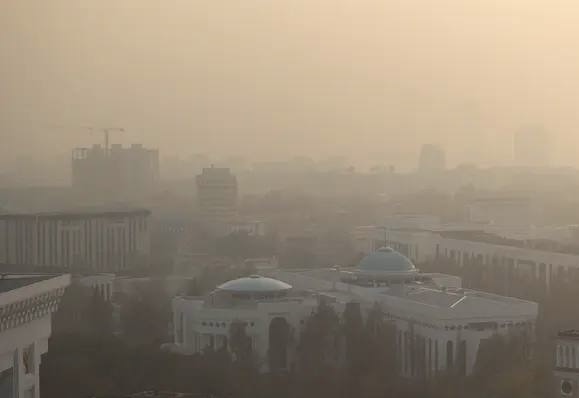
Ahead of the Regional Ecological Summit 2026, experts from the Project Office for Central Asia on climate change and green energy of the Central Asian Climate Fund (CACF) analyzed environmental challenges in Uzbekistan. The third-largest country in the region by area suffers from the consequences of the Aral Sea’s desiccation, desertification, and water scarcity. These factors are exacerbated by climate change, unsustainable water use in agriculture, and the growing volume of household waste. Meanwhile, Tashkent–the largest metropolis in Central Asia–is regularly blanketed by smog.
The Aral catastrophe is one of the largest human-caused environmental tragedies of the 20th–21st centuries and consists in the near-complete disappearance of the Aral Sea due to the diversion of the Amu Darya and Syr Darya river waters to irrigate cotton fields since the 1960s. The sea split into separate parts. The Northern (Small) Aral began to recover thanks to the construction of the Kokaral Dam in Kazakhstan. The Large Aral (the southern part) continues to dry up, and scientists consider its full restoration impossible.
On the bed of the dried sea, a new salt-and-sand desert – the Aralkum – formed, covering about 60,000 km². From there, winds carry around 100 million tons of toxic salts and dust every year. Its emergence caused abrupt climate change impacts, the collapse of ecosystems, and serious public health problems. Read more here…
Uzbekistan is experiencing an acute shortage of water resources, ranking 25th among countries with high water stress. The main drivers are climate change (glacier melt), dependence on transboundary rivers (80% of resources come from outside the country), outdated irrigation systems, and losses of up to 36% of water in unlined earthen canals.
More than 90% of surface waters are polluted, and available reserves are shrinking every year. By 2030, the deficit may reach 7–15 billion cubic meters. Nearly 30% of the population – especially in rural areas – has limited access to clean drinking water. The most difficult situation is observed in Karakalpakstan and in the Kashkadarya, Syrdarya, Khorezm, and Fergana regions. Acute shortages threaten an environmental and social crisis, forcing residents in a number of areas to purchase delivered water.
Desertification in Uzbekistan is an accelerating environmental process that threatens agriculture and ecosystems. The main causes are the drying of the Aral Sea, unsustainable use of water resources, and climate change.
In addition to the formation of the Aralkum Desert, the boundaries of the Kyzylkum, Mirzachul, Sherabad, and Dalvarzin deserts are expanding, affecting Karakalpakstan and the southern and eastern regions of the country. Approximately 9 square meters of land become desertified every minute in the republic. Without action, a sharp decline in fruit exports is projected for 2030–2040 due to land degradation.
Another pressing problem in Uzbekistan is air pollution. According to IQAir, Tashkent regularly ranks among the most polluted cities in the world. Concentrations of PM2.5 particles in the city’s air sometimes exceed the levels recommended by the World Health Organization by 17–37 times. The reasons include high traffic density, emissions from industrial enterprises, coal-based heating, construction activity, and dust from deserts trapped by surrounding mountains.
The waste problem in the country is driven by the absence of separate collection, insufficient recycling infrastructure, and rapid growth in the volume of municipal solid waste (more than 9 million tons per year). Plastics account for up to 15% of waste, while only about 6.6% of the total volume is recycled, leading to illegal dumpsites and contamination of soil and water.
A critical environmental issue is tree felling caused by rapid urbanization, construction, and weak enforcement. Despite the introduction of a moratorium and increased fines, illegal logging of valuable species (plane trees and oak) continues, worsening air quality.
To address these challenges, the country is implementing programs on water saving, introducing drip irrigation, expanding green zones, and transitioning to electric vehicles.
As previously reported, the Regional Ecological Summit will be held in Astana on 22–24 April 2026, where the challenges facing Central Asian countries and ways to address them will be discussed.
