
In Recent Years, Air Pollution Levels in Aktobe Have Been Extremely High
In only 2 out of the last 10 years has the air pollution level in Aktobe been assessed as “low” or “elevated.” In contrast, in 2016, 2018–2019, and 2021 it was classified as “high,” while in 2020 and 2022–2024 it reached the category of “very high”. Between 2023 and 2024, more than 4,900 cases of exceeding the maximum permissible concentration (hereinafter – MPC) of air pollutants were recorded in the regional center
Aktobe is located in Western Kazakhstan, in the central part of the Podurals Plateau, and is characterized by a sharply continental climate with large daily, seasonal, and annual temperature fluctuations.
The city’s industrial sector is closely connected to deposits of chromite, as well as gypsum, construction sand, sand-gravel mixtures, expanded clay raw materials, loam, gypsum and building stone, limestone, mineral waters, and salts.
Aktobe’s major industrial enterprises include the Aktobe Ferroalloy Plant of “TNC “Kazchrome” JSC, JSC “Aktubroentgen,” and JSC “Aktobe Chromium Compounds Plant.” The ferroalloy plant produces 22% of Kazakhstan’s total ferroalloy output. The chromium compounds plant is the only facility in the country producing chromium oxide, chromic anhydride, tanning agents, and sodium dichromate. The city is also home to numerous food industry enterprises.
However, the greatest pressure on air quality is exerted by the wastewater treatment facilities, the waste from alcohol production (bard) accumulated at the site of the former meat plant, the municipal landfill operated by LLP “Aktobe Taza Qala,” and the old solid waste disposal site.
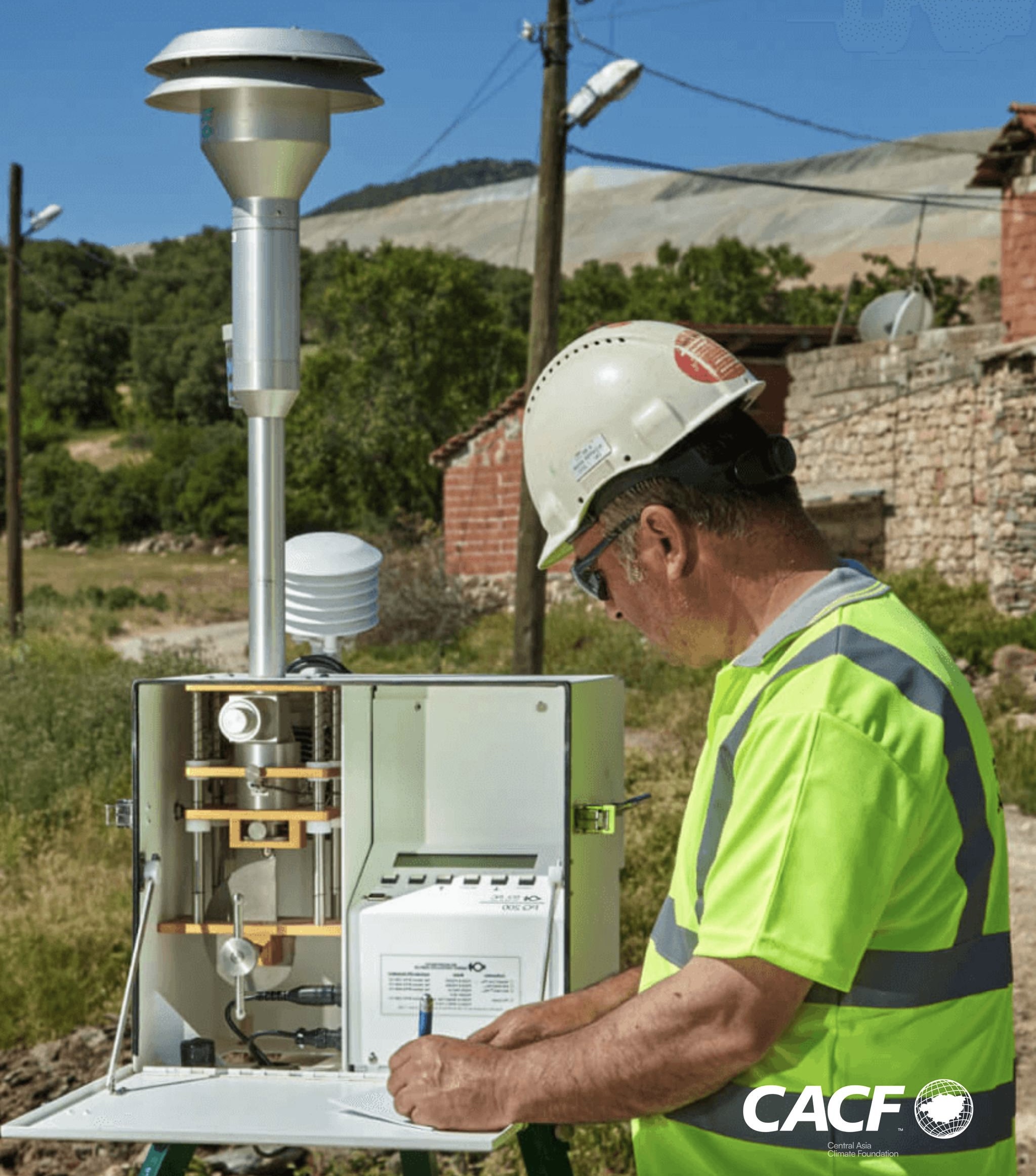
Air quality in Aktobe is monitored at six stationary posts:
- at three of the monitoring posts, manual air sampling is conducted four times per day for 12 parameters: 1) suspended particles (dust), 2) nitrogen dioxide, 3) sulfur dioxide, 4) nitrogen oxide, 5) carbon monoxide, 6) hydrogen sulfide, 7) formaldehyde, 8) chromium (+6), 9) benzene, 10) ethylbenzene, 11) toluene, 12) ortho-xylene;
- at three automated air monitoring stations, data are recorded every 20 minutes for seven parameters: 1) suspended particles (dust), 2) hydrogen sulfide, 3) formaldehyde, 4) nitrogen oxide, 5) sulfur dioxide, 6) nitrogen dioxide, 7) carbon monoxide.
Two indices are used to assess air quality:
- Atmospheric Pollution Index (hereinafter – API) — a metric that considers the concentrations of key pollutants and their potential impacts on human health. It uses daily or annual average concentrations to assess long-term (chronic) pollution levels;
- Standard Index (hereinafter – SI) — the ratio of the highest measured one-time concentration of a pollutant to its maximum permissible concentration. It identifies the most significant pollutant at a specific station or in the city and is used to evaluate short-term pollution.
According to RSE “Kazhydromet,” the atmospheric pollution index in Aktobe was assessed as “low” in 2015, “elevated” in 2017, and as “high” in 2016, 2018–2019, and 2021. In 2020 and 2022–2024, atmospheric pollution levels reached very high values (SI = 13.5–21.3).
In 2023, monitoring stations recorded 2,616 cases of exceeding MPC levels of harmful substances; in 2024, 2,342 cases. The majority of pollutants consisted of hydrogen sulfide, nitrogen dioxide, carbon monoxide, and nitrogen oxides.
As previously reported, the Regional Ecological Summit is scheduled to take place in Astana on 22–24 April 2026, where environmental challenges of Central Asian countries and pathways to address them will be discussed.
