
How Can Central Asia Secure Its Water Supply in a Changing Climate?
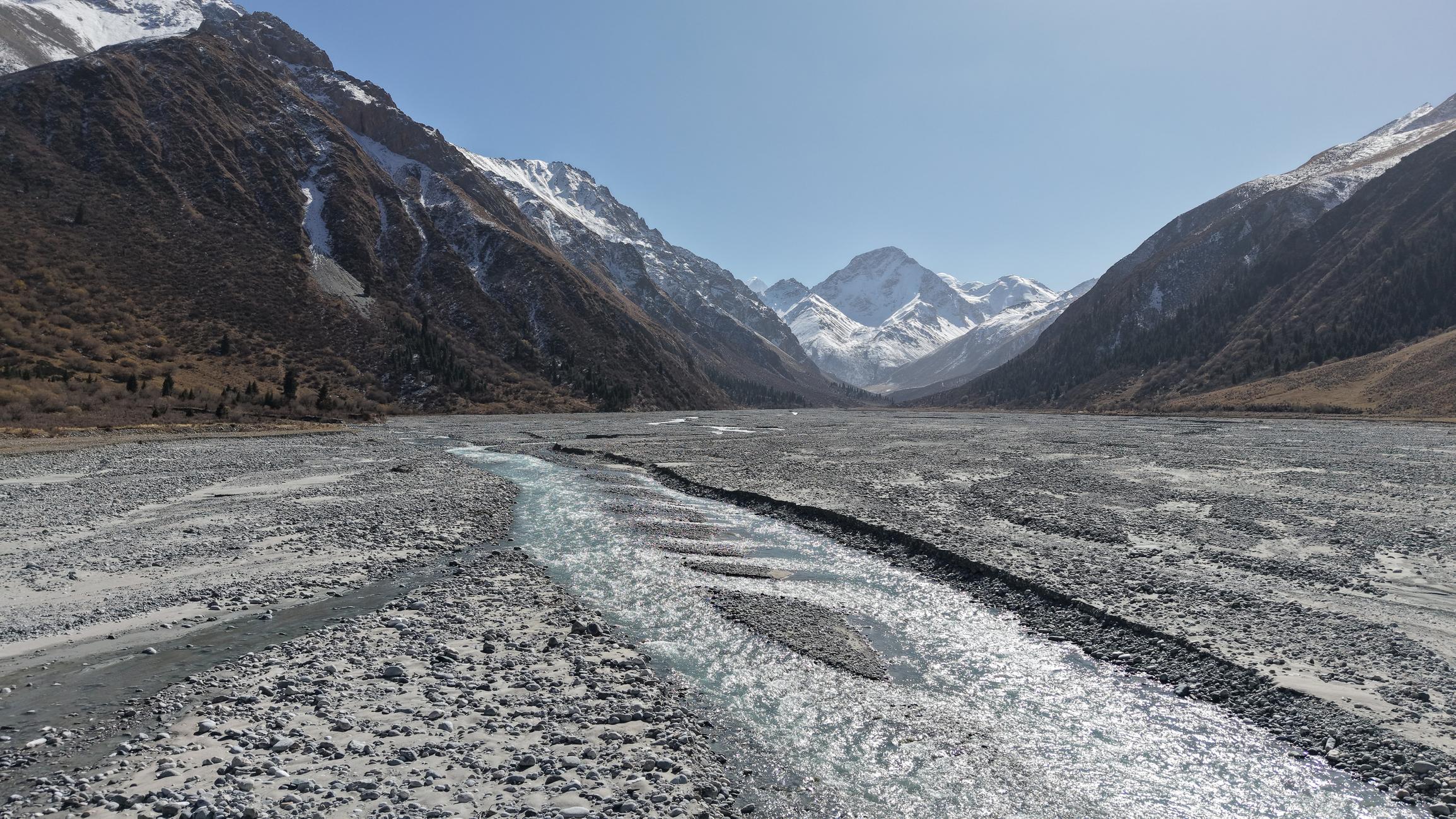
Climate change in Central Asia, driven by global warming, is expected to lead to water shortages in the region in the foreseeable future, posing a threat to food security and potentially triggering forced migration. Temur Yunusov, Doctor of Biological Sciences, Scientific Advisor to the Central Asian Climate Foundation (CACF), and a member of the Cambridge Forum for Central Asia, has proposed possible solutions to the emerging challenge.
The main consequences of climate change can broadly be divided into three key areas: rising average temperatures, increasing freshwater scarcity, and more frequent extreme weather and natural events.
«These factors have an extremely negative impact on all areas of human life. But, as we know, water is the foundation of all life on Earth. More than half of the human body consists of water, while biological processes in nature cannot occur without moisture. In an arid climate, taking into account global warming trends, ensuring access to freshwater in Central Asia is becoming an increasingly pressing issue», said Temur Yunusov.
The largest river in the region is the Irtysh, which originates in the western part of the Mongolian Altai. Today, China withdraws approximately 20% of the river’s total flow in its upper reaches. The Irtysh stretches for approximately 1,700 km across Kazakhstan, from the Chinese border to the Russian border. The river supplies water to five regions and the country’s capital through the K. Satpayev Canal, which is 458 km long.
The above-mentioned canal is the only completed part of the “Siberian River Reversal” project. This was a major Soviet plan developed in the 1970s and 1980s that envisaged diverting part of the flow of the Ob and Irtysh rivers southward to Kazakhstan and Central Asia. In 1986, the project was deemed unfeasible due to the enormous distances involved, colossal economic costs, high electricity consumption, and the risk of an environmental catastrophe.
Most importantly, the Irtysh does not have enough water to supply the entire Central Asian region.
The region’s main water arteries are therefore the Syr Darya—the longest river, flowing through Kyrgyzstan, Tajikistan, Uzbekistan, and Kazakhstan before reaching the Small Aral Sea—and the Amu Darya—the region’s largest river by water volume, formed by the confluence of the Panj and Vakhsh rivers and flowing along and through the territories of Tajikistan, Afghanistan, Turkmenistan, and Uzbekistan. The headwaters of both rivers are fed by glaciers and snow in the high mountains of the Tien Shan and Pamir ranges.
«Due to their geography, Kyrgyzstan and Tajikistan have a greater capacity to generate freshwater and are therefore critical to supplying water to the other countries of the region. However, the issue is more complex, as their own capacity to generate freshwater is likely to decline as the climate changes.
For example, summer freshwater shortages have already been observed in Dushanbe, with newspapers explicitly reporting that there was no snow in the mountains feeding the reservoirs. A similar situation could soon affect Kazakhstan’s largest city, Almaty», Temur Yunusov added.
The future shortage of this vital resource in Almaty is being driven by the accelerated melting of glaciers in the Trans-Ili Alatau, caused by global warming. Over the past half-century, this Tien Shan mountain range has lost more than 40% of its glacial cover, while the Almaty Region as a whole has lost approximately 44% of its glacier reserves. The area covered by glaciers is shrinking by approximately 0.8–1% every year.
From a scientific perspective, the glaciers of the Trans-Ili Alatau have not yet passed the final point of no return—the so-called “peak water” threshold—but they are rapidly approaching it. According to estimates by experts from the Institute of Geography and Water Security of the Republic of Kazakhstan and UNESCO, this critical point could be reached within the next decade. This means that the city, with a population of 2.4 million, needs to start looking for alternative sources of water supply now.
«Water, as a key and irreplaceable resource for agriculture and municipal water supply, must be regarded as a strategic resource for the entire region. Downstream countries should implement all available measures to reduce and conserve water consumption and ensure the maximum possible availability of water for irrigation and domestic use. This includes investing in water-management and conservation projects in upstream countries to increase the availability of freshwater in downstream countries.
Even these measures may not be sufficient to meet the water demand of Central Asia’s growing population. Therefore, all countries should consider implementing strict and technologically advanced wastewater treatment systems so that the maximum possible share of wastewater is treated and returned to use», Temur Yunusov emphasized.
According to the expert, one possible solution is to divide water into different quality categories and restrict their respective uses. For example, the highest-quality water could be used exclusively for municipal infrastructure; water that is not suitable for human consumption but remains suitable for agriculture, such as treated wastewater, could be used for irrigation; while water unsuitable for irrigation could be used in industrial processes that do not require highly purified freshwater.
«This would mean not only establishing legal and regulatory classifications based on water quality, but potentially also creating new pipeline networks for the separate transportation of water of different quality levels.
In addition, it may be worth investing in desalination plants across the region to provide backup freshwater capacity during extreme years. Saline and brackish groundwater could be used for desalination. Such groundwater is widespread in desert and semi-desert areas, including the Karakum and Kyzylkum deserts, the Aral Sea region, and the Betpak-Dala. These waters occur in shallow aquifers and artesian basins, often alongside freshwater lenses. They play an important role in the formation of salt flats but have limited suitability for drinking without prior desalination.
To store water, reservoirs with narrow openings could be constructed on the principle of giant underground pots. This would help reduce the evaporation of this vital resource during the intense summer heat.
It is important to understand that none of the approaches listed above can, on its own, solve the emerging water shortage problem. A combination of different solutions must be applied to ensure water security for a specific region or sector», Temur Yunusov concluded.
It should be recalled that the issue of ensuring water security in the countries of Central Asia was discussed at the highest level, as well as during sessions of the Regional Environmental Summit held in Astana in April 2026.
Paragraph 3 of the Declaration of the Heads of State of Central Asia on Regional Cooperation in the Field of Environment and Sustainable Development, “Environmental Solidarity of Central Asia,” adopted following the Summit, states that, taking into account the initiative of the Republic of Kazakhstan regarding the possibility of establishing an International Water Organization within the United Nations system, the Presidents of the countries of the region emphasized that further consideration of this issue should be carried out on the basis of broad international consensus within the framework of relevant UN processes.
