
Central Asia lost 44% of glacier area
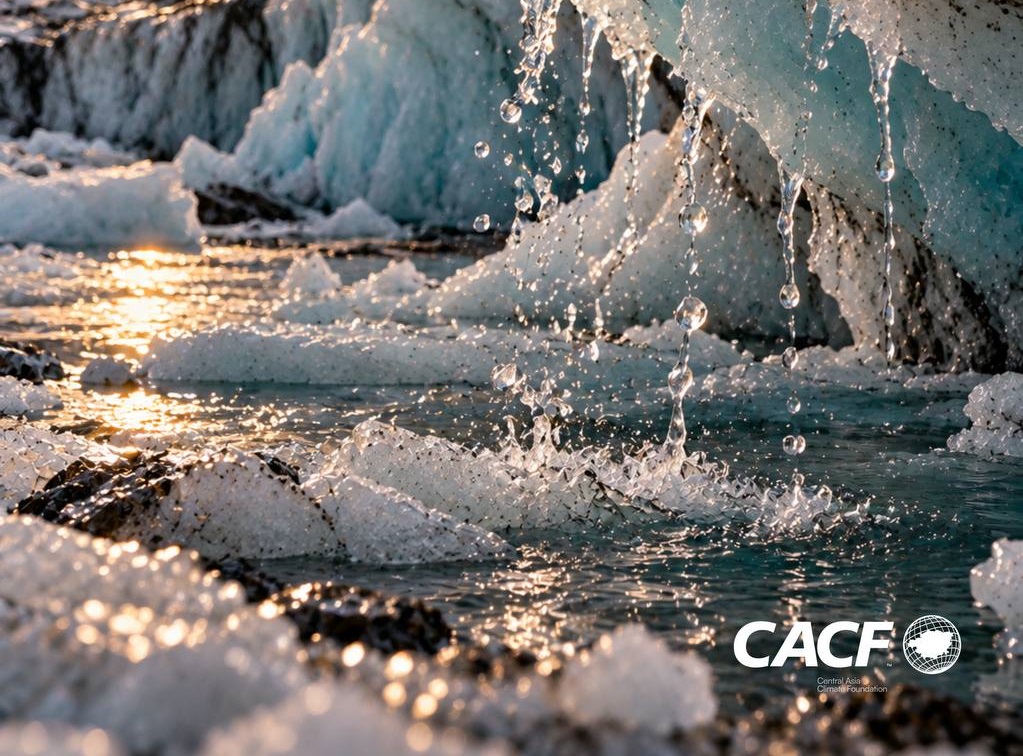
Due to global warming, Central Asia has been losing tens of billions of tons of ice annually in recent years. According to experts, if the current climatic trends continue, by 2100 the Tien Shan and Pamir mountain systems may lose up to 85% of the volume of their glaciers. This poses a direct threat to water security and agriculture, which provide life for more than 80 million residents of the region.
In 2025 alone, the glaciers of Central Asia lost about 26 billion tons of ice, which is equivalent to about 30 cubic kilometers of water. In general, approximately 44% of the ice sheet has been lost in the region.
Over the past few decades, the volume of glaciers in Tajikistan, which form more than 60% of the region's water resources, has decreased by almost a third, and over 1,000 of the 14,000 glaciers have completely melted.
In Kyrgyzstan, over the past 50-70 years, the area of glaciation has decreased by 16%, more than 30% of glaciers have melted.
In the mountains of Kazakhstan, there is a critical reduction in the ice sheet: over the past 70 years, the country has lost about 47-50% of its ice reserves. Kazakhstan loses almost 1% of its glaciers every year. In the middle of the last century, there were about 2,750 glaciers on the territory of the republic, today there are about 2,400 of them – small glaciers have completely disappeared, and large ones have lost up to half of their area. The largest losses were recorded in Dzungarian (Zhetysusk) and Zailiysky Alatau. The famous Tuyuksu glacier in Zailiysky Alatau has retreated more than a kilometer.
Experts estimate that melting is expected to peak between 2035 and 2055, and the region could lose about a third of its glacial reserves by 2050. If current climate trends continue, Central Asia could lose up to 85% of its glacier volume by 2100.
The main cause of melting glaciers is global warming. Temperatures in Central Asia are rising almost twice as fast as the global average, according to the Eurasian Development Bank. Winter is getting shorter and summer is getting longer and hotter. The melt season starts earlier and lasts longer. During the cold period, less snow falls, which should feed the glaciers. In summer, rainfall also decreases, depriving glaciers of natural protection. In the highlands, snow is increasingly replaced by rain. Rainwater does not feed the glacier, but on the contrary accelerates surface melting and contributes to erosion.
According to environmental observations, the number of sand and dust storms in the region has increased many times, which increases the load on the alpine ecosystems of Tajikistan, Kyrgyzstan, Uzbekistan and Kazakhstan. Frequent dust storms cause sand to settle on the surface of glaciers and reduce their albedo (reflectivity), which causes ice to absorb more solar heat and melt faster.
As the snow-ice sheet shrinks, exposed dark sections of mountains absorb even more solar radiation, further spurring warming.
«Glaciers are a source of fresh water for all of Central Asia. They melt very quickly, and we have already lost 44% of their volume. In the short term, this means that more water flows into the Syr Darya, Amu Darya, Ili and other transboundary rivers in the region, but in the longer term, this threatens a whole series of problems.
After 2055, the flow of rivers will begin to fall sharply, which will lead not only to problems with agriculture and the provision of drinking water to the population, but also interruptions in the generation of energy by hydroelectric power plants in Kyrgyzstan and Tajikistan. An example is the shutdown of Hungary's only nuclear power plant this summer due to water shortages in the Danube», said Temur Yunusov, scientific consultant at the Central Asian Climate Foundation, Doctor of Biological Sciences, member of the Cambridge Forum on Central Asia.
The expert believes that the melting of glaciers and permafrost increases the risks of the formation of new and breakthrough of existing glacial lakes, mudslides, landslides and erosion of dams.
An example of terrible consequences is the tragedy in Nepal on August 26 this year. The collapse of the glacier from Mount Langtang-Lirung provoked a powerful landslide and a 4.4 magnitude shock. As a result of the disaster, about 1,500 people were killed, thousands were injured, and several thousand people were reported missing. More than 40 km of roads and 80 bridges were damaged. The damage is estimated at about 200 billion Nepali rupees (about 1.3 billion US dollars).
«The disappearance of glaciers and the future reduction of river flow will lead to shallowing of the Syr Darya in the summer and to the loss of the remaining part of the Aral Sea in Kazakhstan.
In addition, the issues of distribution of river flow between countries upstream and downstream will significantly aggravate, which could provoke geopolitical tensions in the region», Temur Yunusov emphasized.
Globally, the melting of glaciers will lead to much more terrifying consequences.
Since 2000, glaciers around the world have lost about 5% of their volume, which is approximately 300-450 billion tons of ice annually. Mountain glaciers are hardest hit in Central Europe (up to 40% of volume lost), as well as in the Tien Shan, Pamirs, Hindu Kush, Himalayas and Alps. Equatorial peaks, such as Kilimanjaro, are losing ice cover at a record fast.
Glaciers store about 70% of the fresh water on Earth. Their reduction threatens water supply and agriculture for more than 2 billion people dependent on mountain rivers, including the regions of Central and South Asia.
Water from melting glaciers and shields in Greenland and Antarctica is raising sea levels. The complete destruction of individual key massifs, such as the Thwaites Glacier («Doomsday Glacier» in Antarctica), can raise the ocean level by another 65 cm, and the total melting of all ice on the planet - by tens of meters, flooding coastal cities and destroying some island states.
Ocean currents, such as the Gulf Stream, can slow or change due to the influx of cold fresh water, which threatens Europe with sharp cold snaps, and other regions with severe droughts and increased storms.
Thawing permafrost and Arctic ice has the potential to activate dormant viruses and bacteria.
