
How much does the ESG business cost and what will inaction cost?
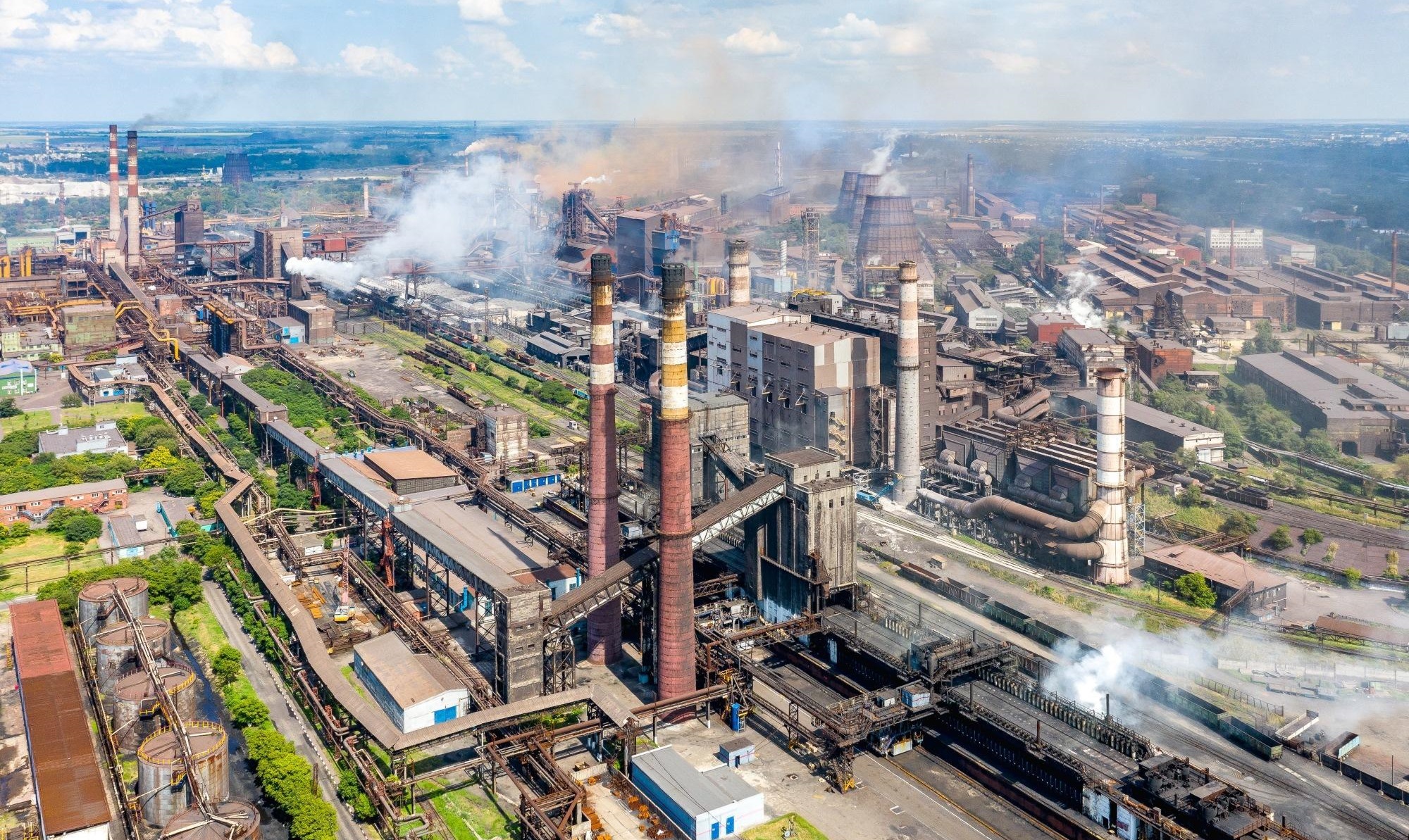
Are environmental, human and governance costs paying off? Analysts of the ESGQ rating agency based on open data calculated the price of ESG implementation and the price of inaction on the figures of Kazakhstan. The report costs the company from several thousand euros per year to a million or more. Abandoning modernization now also has a price, and it is spelled out in law: the largest polluters without an environmental permit by 2031 will pay 12 times more for emissions than today.
ESGQ suggests looking at ESG as two accounts. The first company pays for itself and in advance: it counts emissions, prepares a report, changes equipment. The second comes if nothing is done: emission fees rise, exports to Europe rise in price, one accident crosses out years of savings. The first bill is visible in the budget immediately. The second comes later and the amount in it is usually higher.
How much does it cost to do ESG?
Report. Checking the report alone by an independent auditor according to European standards costs about 115 thousand € per year for a small company and about 1 million € for a large one. This is 40-50% of all costs, so a full report is about twice as expensive. For an average company, a simplified report costs €7,500-12,800 in the first year and €3,500-6,000 in the next.
Equipment. The transition to the best available techniques costs orders of magnitude more than the report. In the example given by ESGQ analysts, a large plant costs 100 billion tenge in six years.
How much does it cost not to do ESG?
Payment for emissions increases according to the schedule of the law, if there is no comprehensive environmental permit.
CBAM is a European emissions levy on the production of imported goods. Without verified data, the EU considers emissions at inflated values.
Accidents cost more than decades of reporting: an oil spill in the Gulf of Mexico cost BP $67 billion, a dam break in Brumadinho cost Vale 37.7 billion reais by settlement.
Emissions charge: fork in law
Since 2026, the payment for emissions in Kazakhstan is arranged as a fork with two outcomes - this follows from the new Tax Code. An enterprise of category I, which has an integrated environmental permit and emissions are within its standards, does not pay for these emissions at all. An enterprise without such permission pays more every year.
Rates for sulfur and nitrogen oxides will rise from 20 MCI per ton in 2026 to 40 MCI from 2028 and 60 MCI from 2031. MCI in 2026 is 4,325 tenge. The 50 largest polluters have an increasing coefficient on top of the rate: 2 in 2026-2027, 4 in 2028-2030, 8 from 2031. As a result, their fee by 2031 will increase 12 times from the level of 2026. For other objects of category I without permission, the fee will increase 6 times.
The list of 50 largest objects was approved by Government Decree No. 187 of April 1, 2022. It has 19 power plants and thermal power plants, 8 oil and gas production facilities, 7 cement plants, 4 metallurgical plants, 3 oil refineries and another 9 non-ferrous metallurgy, mining and chemistry enterprises. The decree entered into force on January 1, 2025, and for 20 objects, mainly energy, - from January 1, 2031.
So far, the fee for emissions is small: in 2024, all 190 subsoil users from the EITI report paid 47 billion tenge for emissions. That is why many enterprises postpone modernization. But, as noted in ESGQ, the law makes each next delay more expensive than the previous one.
Europe: Someone who doesn't count emissions pays
The second scheduled score comes from Europe. Since 2026, the importer of steel, aluminum, ferroalloys and fertilizers in the EU has been buying CBAM certificates: one for each ton of CO ₂ emitted in the production of goods. In the first quarter of 2026, the certificate cost 75.36 €, in the second - 75.28 €.
If the manufacturer does not have verified data on its emissions, the EU applies default values. For Kazakhstan, this is 5.18 tons of CO ₂ per ton of steel bar, 2.35 tons per ton of ferrochrome and 1.87 tons per ton of aluminum, plus a premium: 10% in 2026, 20% in 2027 and 30% from 2028. Free quotas of European manufacturers are reduced from 97.5% in 2026 to zero in 2034, so the collection is growing even with the same export volumes.
According to the International Trade Center and QazTrade, which is cited by the EU Representative Office, the calculation by default values costs Kazakhstani exporters more than 100 million € per year, about 90% falls on steel bar.
Does modernization pay off: an example of one plant
To show how this works in practice, ESGQ analysts considered a conditional example: a metallurgical plant that sells products abroad and is on the list of 50 largest pollutants. This is a model, not a real enterprise. The calculation covers ten years - from 2026 to 2035.
What he spends. The plant is changing equipment for modern: 100 billion tenge in six years (the calculation is based on the assessment of the KAZENERGY association, carried out in 2020). Another 0.6 billion tenge per year is spent on accounting for emissions and reporting.
What he gets. With the new equipment, the plant in 2029 receives an environmental permit and ceases to pay for emissions within normal limits. Without permission, its fee would have increased from 5 billion tenge per year today to 20 billion in 2028 and to 60 billion since 2031. In addition, he has less risk of a major accident and loans are slightly cheaper.
Inference. For a 50-list plant, the emissions fee saved alone is more than the cost of new equipment. Modernization pays off and brings additional profit.
More details on the analysis can be found on the website of the ESGQ Rating Agency https://esgq.kz/.
As a reminder, ESG is a set of business standards in which a company takes into account its impact on the environment, society and management quality. The abbreviation stands for Environmental, Social, Governance (ecology, social responsibility, corporate governance).
As previously reported, the Central Asian Climate Fund (CACF) and ESGQ Rating Agency signed a Memorandum of Cooperation. The parties agreed that the priority areas of interaction will be the application of the ESGQ methodology for assessing ESG maturity in CACF projects, the development of methodologies for assessing climate risks, as well as joint analytical and educational products for business and government agencies in Kazakhstan and Central Asia.
ESGQ rating agency was founded in 2022 and is the first ESG rating agency in Central Asia. The agency conducts ESG scoring and ESG risk assessment by industry and enterprise according to its own methodology (registered copyright object), forms ESG passports, helps companies develop sustainable development strategies and non-financial reporting, and implements training programs. ESGQ is a member of the UN Global Compact.
