
672,000 hectares of the Aral Sea’s dried seabed reforested with saxaul over 4 years
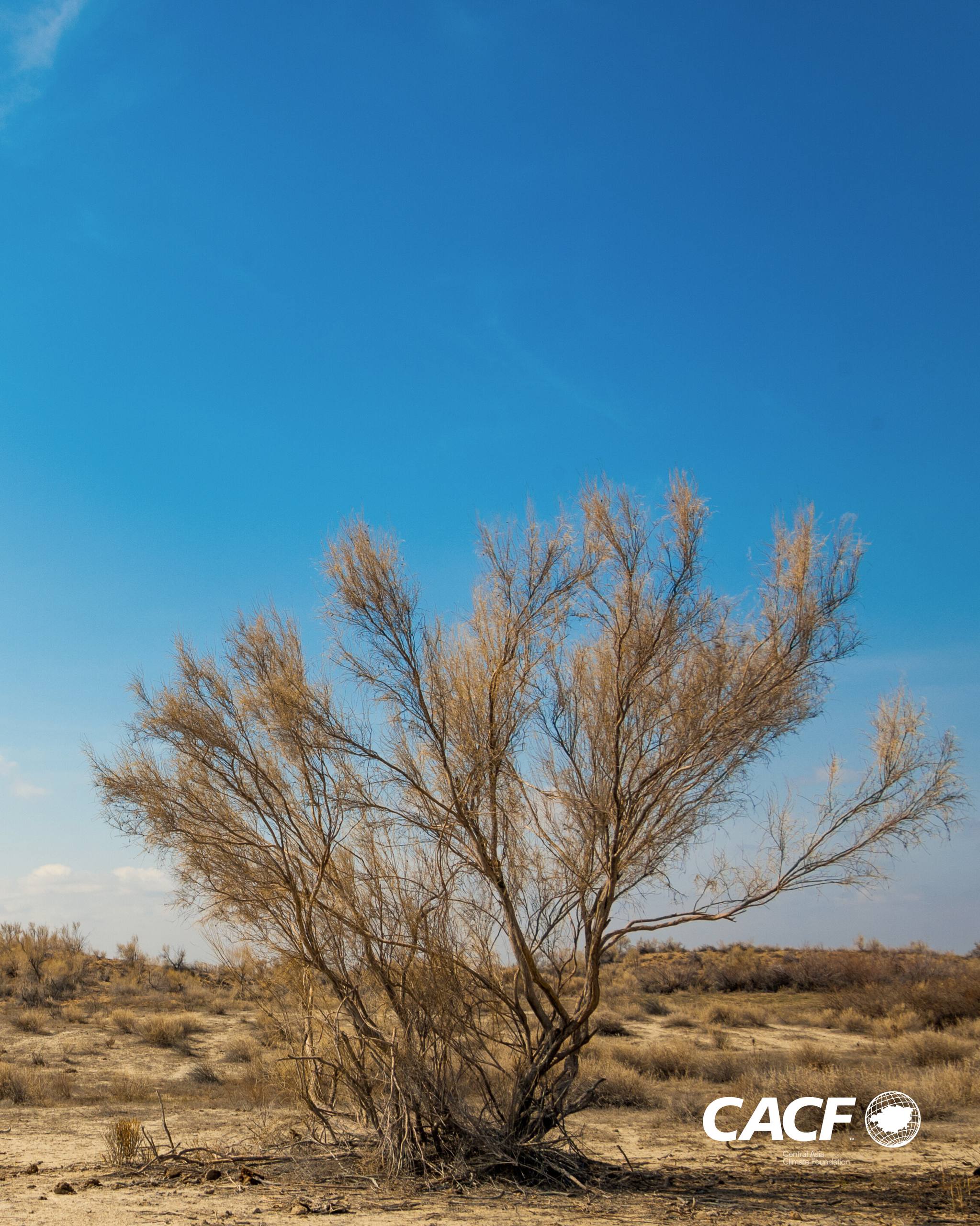
To combat land degradation and desertification in southern Kazakhstan, large-scale phytomelioration efforts were carried out on 672,000 hectares of the dried seabed of the Aral Sea between 2021 and 2024 through the planting of saxaul forests.
According to the 2024 National Report on the State of the Environment and the Use of Natural Resources of the Republic of Kazakhstan, afforestation and forest-melioration activities remain one of the most effective measures for preventing desertification. For this reason, systematic saxaul planting has been implemented on the dried seabed of the Aral Sea for several consecutive years.
The Committee for Forestry and Wildlife of the Ministry of Ecology and Natural Resources of the Republic of Kazakhstan reports that the total area of the dried seabed of the Aral Sea is 6 million hectares, of which 2.8 million hectares lie within Kazakhstan.
Over the four-year period, forest-melioration works were completed on the following areas: 2021: 101,000 hectares, 2022: 250,000 hectares, 2023: 194,000 hectares, 2024: 127,000 hectares. These activities are being implemented as part of the mandate set by the President of Kazakhstan to establish 1.1 million hectares of saxaul plantations on the dried seabed of the Aral Sea by 2025.
To ensure an adequate supply of planting material, a 33-hectare forest nursery with an annual production capacity of 3 million saxaul and halophytic shrub seedlings was constructed in 2024 in the town of Kazaly, supported by a World Bank–financed project. Halophytes are plant species adapted to saline soils typical of arid desert environments.
Additionally, under scientific supervision, the Ministry of Ecology and Natural Resources is constructing a new 15-hectare forest nursery located directly on the dried seabed of the Aral Sea, with a production capacity of 1.5 million saxaul seedlings per year. Seedlings grown in this nursery will be naturally better adapted to the highly arid climatic conditions of the former seabed.
Overall, these afforestation and phytomelioration efforts aim to reduce dust storms, rehabilitate degraded lands, and support the formation of resilient ecosystems in the region.
As previously reported, the Regional Ecological Summit 2026 will take place in Astana from 22 to 24 April 2026, where the countries of Central Asia will discuss environmental and climate challenges and develop joint solutions. Key topics will include the desiccation of the Aral Sea, the declining water level of the Caspian Sea, and the consequences of climate change.
