
Soils in Kazakhstan are contaminated with radioactive and industrial waste, heavy metals, oil and petroleum products
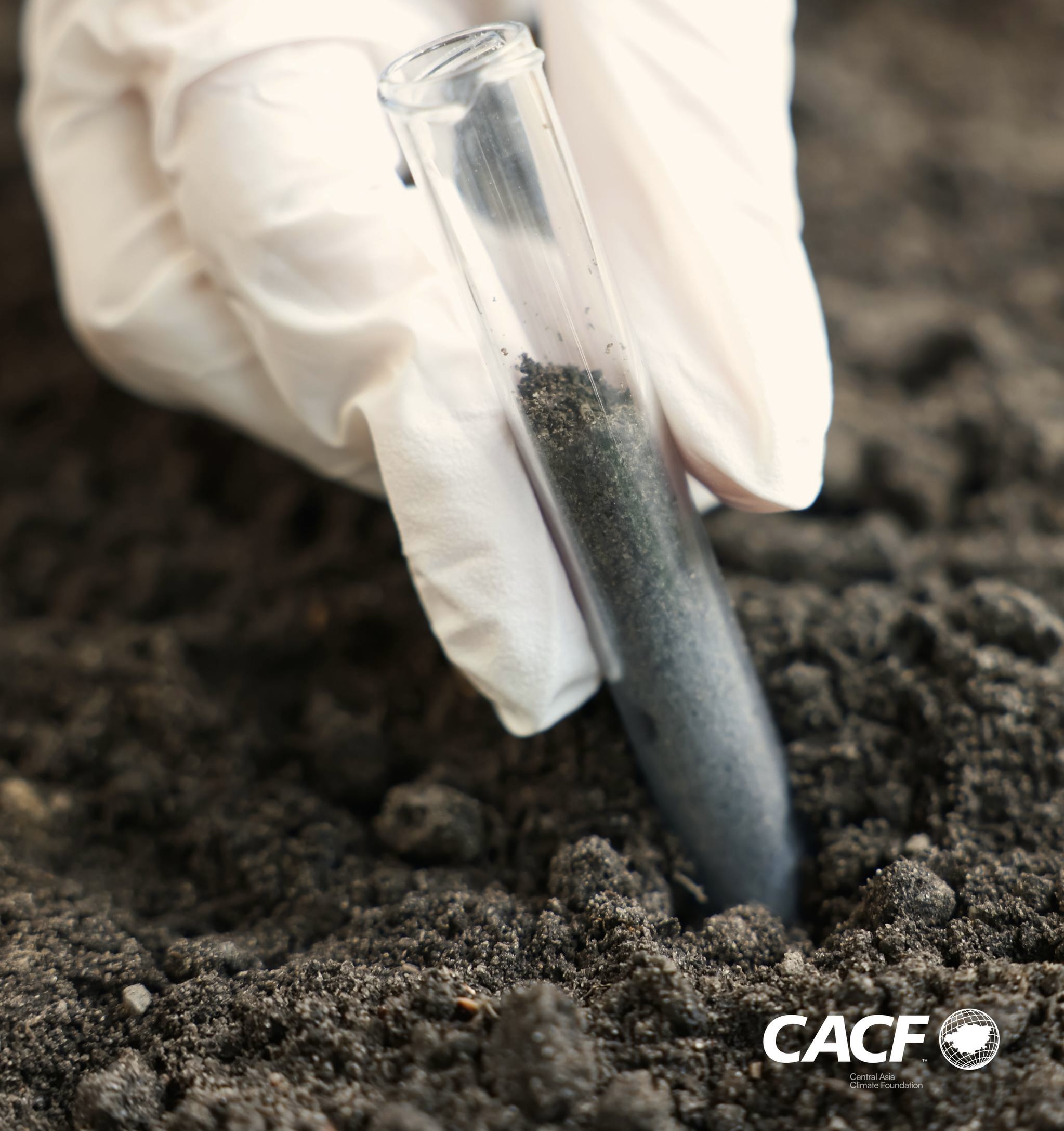
Kazakhstan has numerous areas where soils are contaminated by atmospheric emissions, solid and liquid wastes from industrial and energy enterprises, military-industrial facilities, oil and petroleum products, as well as municipal waste. Long-term soil contamination negatively affects biodiversity, reduces organic matter reserves, and diminishes the soil’s filtration capacity. After analyzing the National Report on the State of the Environment and the Use of Natural Resources in the Republic of Kazakhstan for 2024, experts of the Central Asia Climate Foundation identified territories with excessive contamination by radionuclides, heavy metals, and toxic substances.
The most hazardous form of soil pollution in Kazakhstan is radioactive contamination. The country has six major uranium provinces and numerous smaller deposits and uranium-bearing formations, which contribute to elevated natural radiation backgrounds. Over the entire period of uranium industry operations, approximately 200 million tons of radioactive waste have accumulated in Kazakhstan.
Additionally, Kazakhstan is home to four military testing sites and the Baikonur Cosmodrome. The fall zones of rocket boosters occupy vast territories in the Karagandy, Ulytau, Akmola, Pavlodar, and East Kazakhstan regions. According to the State Research and Production Association “Kazmekhanobr,” the total area of land exposed to contamination from rocket fuel combustion products and falling rocket stages reaches about 9.6 million hectares. In the influence zones of military testing sites, excessive radioactive contamination of the environment with radionuclides, heavy metals, and toxic substances has been identified.
Severe soil contamination by heavy metals is also observed around major cities. The steadily growing number of motor vehicles plays a significant role in this process. At the same time, industrial centers have formed hotspots of soil pollution caused by emissions from industrial enterprises. For example, concentrations of lead, copper, zinc, and cadmium in soils around Ust-Kamenogorsk, Ridder, Zhezkazgan, Shymkent, and Karagandy significantly exceed the maximum permissible concentrations (hereinafter – MPCs).
In Kazakhstan’s main rice-growing regions, exceedances of MPCs for lead, nickel, and copper are also observed. According to the U.U. Uspanov Kazakh Research Institute of Soil Science and Agrochemistry, in the ancient-delta alluvial plains of the Syrdarya River within the Shieli rice-growing massif, the concentration of mobile and total forms of lead exceeds the MPC by two times, while mobile forms of nickel exceed it by 1.5 times. In recent years, soil salinization has intensified due to the mineralization of Syrdarya waters, caused by the discharge of large volumes of highly mineralized collector-drainage waters.
All industrial regions of the country contain ecologically hazardous impact zones: spoil tips, waste heaps, open pits, drilling wells, and mining waste sites that together cover over 60 thousand hectares, continuously contaminating the soil. As a result of non-ferrous metallurgy operations alone, Kazakhstan has accumulated more than 22 billion tons of industrial waste, including approximately 4 billion tons of mining waste, over 1.1 billion tons of toxic beneficiation waste, and 105 million tons of metallurgical waste.
According to the Ministry of Ecology and Natural Resources of Kazakhstan, the country has accumulated 31.6 billion tons of industrial waste, with about 1 billion tons generated annually. Of the total, 70% consists of technogenic mineral formations, including overburden rock and ash-slag waste.
In addition to issues related to industrial and toxic waste, most settlements in the country face serious challenges in the storage and processing of rapidly increasing volumes of municipal waste. All municipal waste is transported to landfills, 97% of which do not meet sanitary requirements and environmental standards, except for the landfill in the capital.
Another major environmental issue in Kazakhstan is the contamination of natural environments with oil and petroleum products. This causes a near-complete suppression of soil microbial activity, leading to significant disruptions in ecosystem balance. In Western Kazakhstan, the total area of oil-contaminated land is 194 thousand hectares, while the volume of spilled oil exceeds 5 million tons.
According to research conducted in the Atyrau Region, the highest levels of soil contamination with petroleum products were found near the Makat field. In severely polluted areas, the maximum concentration of petroleum products reaches 172,480 mg/kg, while the maximum permissible concentration in Kazakhstan is 100 mg/kg. High contamination levels have also been recorded near the Dossor, Komsomol, Tanatar, Tenteksor, and Eskene fields, where MPC exceedances range from 24 to 138 times.
As previously reported, the Regional Ecological Summit is scheduled to take place in Astana on 22–24 April 2026, where the environmental challenges of Central Asian countries and pathways for collaborative solutions will be discussed.
