
CACF chief at ORF Council meeting: Investment goes where risk is managed
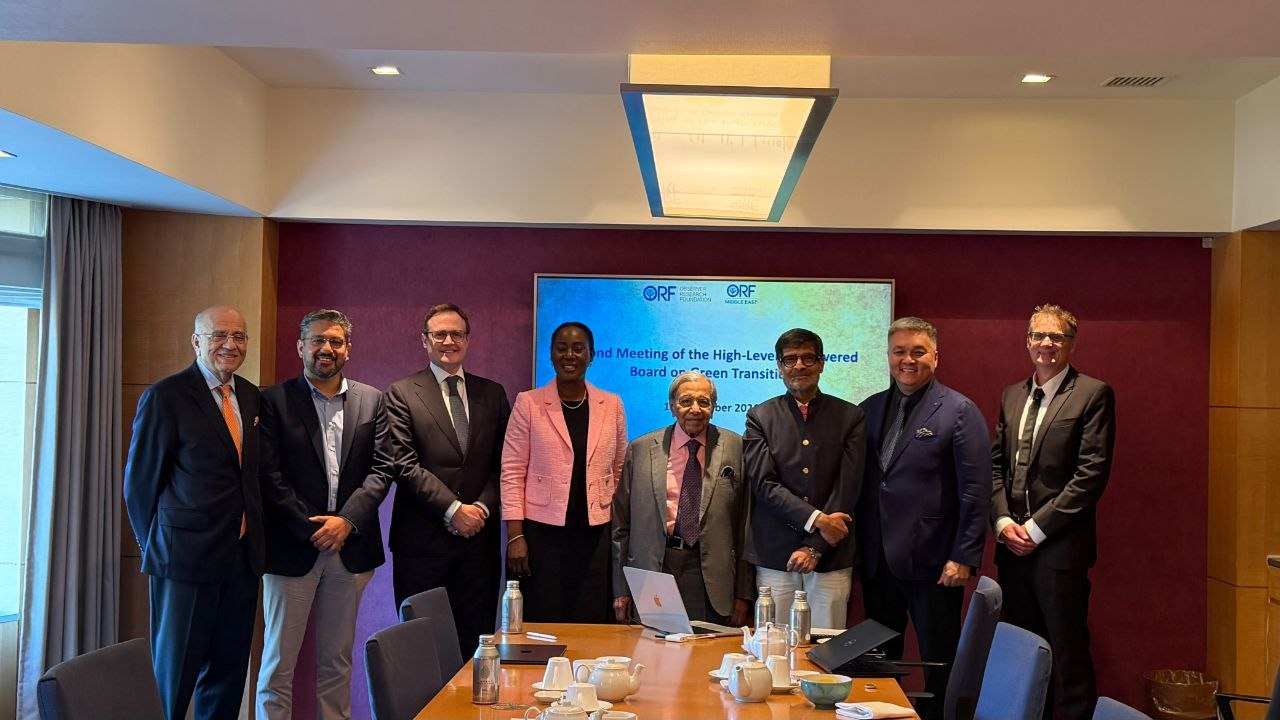
Erlik Қаrazhan, CEO of the Central Asian Climate Fund (CACF), attended the second meeting of the Observer Research Foundation (ORF) High Advisory Council on Green Transition. The head of the CACF stressed that access to information about companies is an important factor in ensuring green financing.
The event took place on November 18, 2026 in Tokyo. The meeting was chaired by Council President Nand Kishore Singh, co-chair of the G20 Independent Expert Group on Strengthening Multilateral Development Banks. The discussion was attended by President Emerit of the Center for Global Development (USA) Masoud Ahmed, Managing Director of Ecobank Cameroon Gwendolin Abunau, Shadow Foreign Secretary Tom Tugendhat and others.
It should be noted that the meeting of the Council took place shortly after the COP31 in Antalya, where on November 9 a separate work program on climate finance was adopted. Council members discussed how to more effectively use more than $650 billion of additional lending potential of multilateral development banks, how to accelerate the development of renewable energy with the involvement of private capital and reduce losses in power grids, how to develop international cooperation, including between the countries of the Global South.
In his speech, Erlik Қarazhan drew attention to the fact that one of the reasons for the high cost of capital, which is rarely voiced by experts, is the lack of verifiable information about companies. When an investor cannot assess how a company is managing environmental and climate risks, they put an additional premium in the price, demand a government guarantee or abandon the project.
Қаrazhan noted that according to an analysis conducted by CACF together with the ESGQ rating agency, 556 largest companies in Kazakhstan from 24 industries publish on average 18% of information significant for the market. In the environmental area, their average score is only 5 out of 100, while in corporate governance – 18.
«Investment does not go where it is needed, but where risk is managed. The state, market and development banks often speak different languages. Access to information and its understandable interpretation is a condition for capital to come where it is really needed, and for all parties to speak the same language», Yerlik Қarazhan said.
He also stressed that improving energy efficiency, modernizing infrastructure and the water agenda are priorities for Kazakhstan and Central Asia: a significant part of the region's water resources is transboundary, and adaptation to climate change is becoming a key task.
On November 19, the Head of CACF attended the Raisina Tokyo conference, the main theme of which was Indo-Pacific cooperation, primarily the partnership between India and Japan, including financing energy infrastructure and technological cooperation in the field of climate change.
Within the framework of the conference, an open panel session of the Council "Financing the Green Transition: Capital, Risks and the Global Growth Imperative" was held. The discussion was attended by Japanese Foreign Minister Toshimitsu Motegi, Indian Foreign Minister Subramanyam Jaishankar, Japanese Defense Minister (2019-2021 - Environment Minister) Shinjiro Koizumi, University of California professor Nikit Abhyankar, Auckland University of Technology representative Niven Winchester and others.
Following the meeting in Tokyo, the Council identified a number of priority areas of work with quantitative goals. The first year performance report of the Council is scheduled to be presented at Raisina Dialogue in New Delhi in March 2027, with final recommendations in March 2028.
As you know, ORF is a leading Indian independent think tank specializing in geopolitics, economics, energy, cybersecurity and global governance. It makes recommendations for the G-20 and hosts the annual Raisina Dialogue in New Delhi.
The above-mentioned Council was formed with the aim of strengthening cooperation in the field of climate finance and initiating institutional reforms in international institutions and multilateral development banks, with a focus on attracting green investments to the countries of the Global South.
Erlik Қаragan's participation in the Council ensures that Central Asia is represented in the discussion of the global climate finance architecture and the green transition.
