
Press Conference with Climate Expert, Nobel Peace Prize Laureate Alexey Kokorin
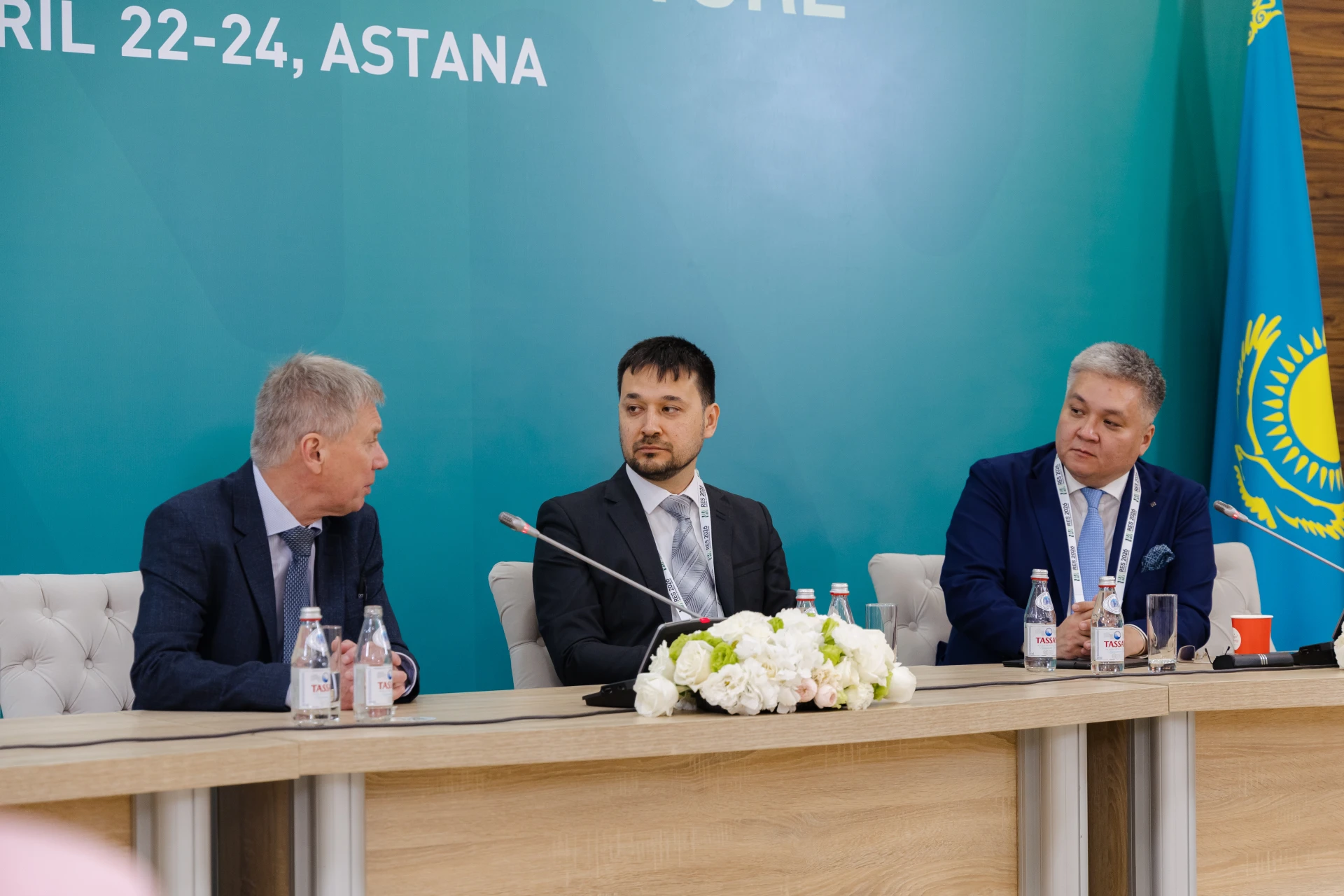
Nobel Peace Prize laureate Alexey Kokorin spoke at a press conference about current developments in the climate system. The expert noted that the climate has always changed; however, anthropogenic trends are now superimposed on natural climate variability (driven by the sun, volcanoes, and oceanic variations such as El Niño and La Niña, which have not ceased).
“It is relatively small, but while solar fluctuations vary between positive and negative phases, the anthropogenic trend is constant. As a result, if we average this over fifty years, human influence becomes dominant. I would like to emphasize that this is not a hypothesis, not a model, and not merely air temperature measurements. It is an experimental fact, irrefutably confirmed,” said Russian climatologist Alexey Kokorin.
The key component of the climate system is the ocean, and scientists have obtained data showing that all oceans are warming simultaneously. It has also become clear that this is not merely an internal redistribution of energy.
“Isotopic analysis has shown that the increase in CO₂ and methane concentrations is unequivocally linked to human activity, rather than natural imbalance. Nature is balanced, whereas humans are attempting to disrupt it,” the scientist added.
In addition, the greenhouse layer is becoming thicker, causing the lower stratosphere to cool and the near-surface layer to warm. This is primarily driven by the burning of fossil fuels, deforestation, and the growth of livestock farming.
The greenhouse effect itself accounts for 33 degrees, and human activity has intensified it by an additional 2 degrees. The total warming to date is approximately 1.5 degrees.
The speaker also shared a forecast for Central Asia. He noted that scientists have developed around 30 global models that produce similar projections.
“In Russia, this work is carried out by the Main Geophysical Observatory and the Institute of Numerical Mathematics of the Russian Academy of Sciences. Unlike Southern Africa or the Mediterranean, Central Asia will not experience a catastrophic decline in precipitation levels. Water input from above will continue. The main issue lies in redistribution. There will be slightly more precipitation in winter and significantly less in summer. River flow will increase in winter and decrease substantially in summer, when water is most needed. Although the overall volume of water will not change critically, the main challenge is the region’s growing population, which is what creates the primary deficit in water resources,” Alexey Kokorin stated.
