
Kazakhstan's Industrial Facilities Emitted Over 2.2 Million Tons of Pollutants into the Atmosphere in 2024
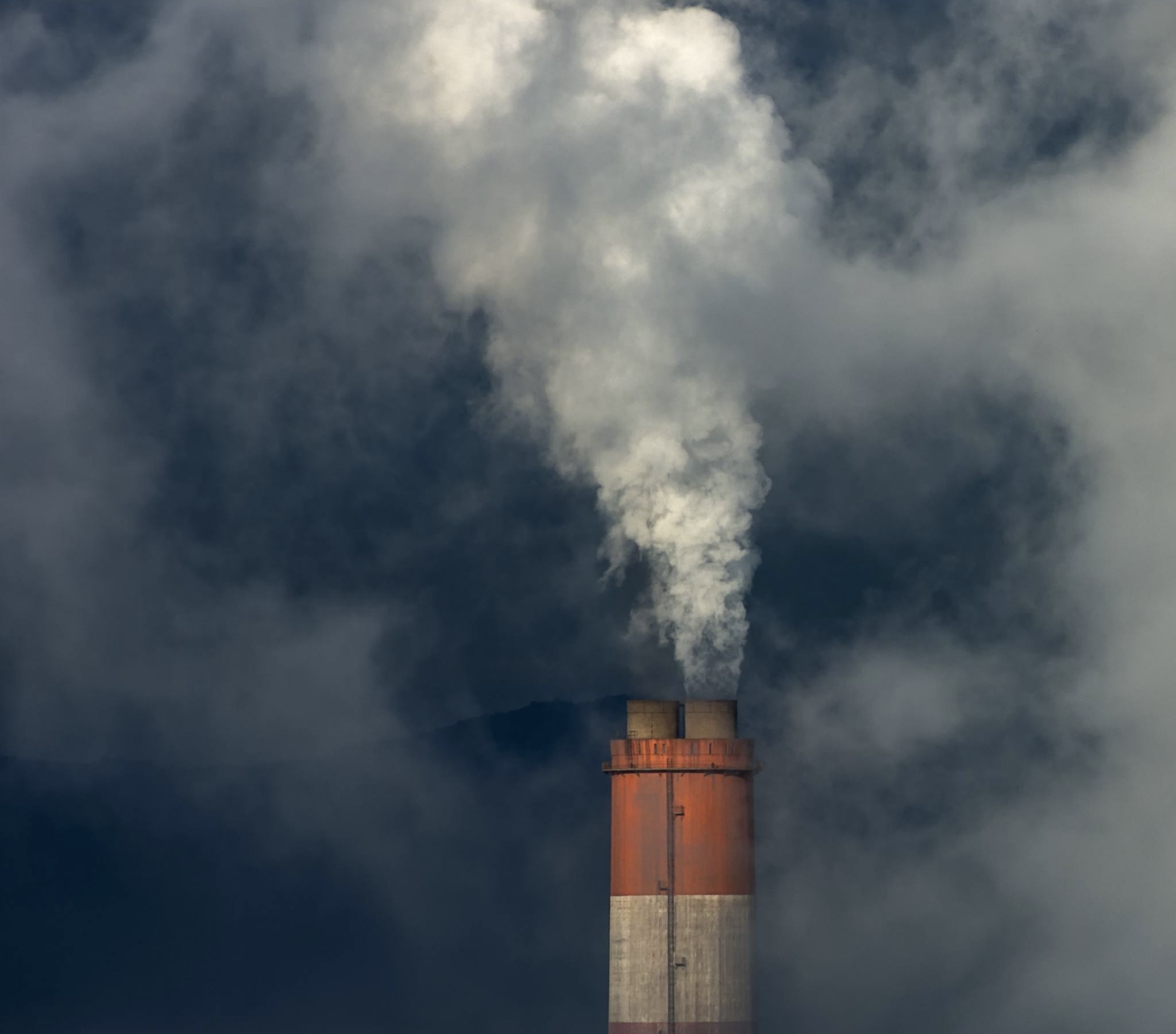
According to the Bureau of National Statistics of ASPR RK, more than 232.8 thousand stationary pollution sources operated in Kazakhstan in 2024, releasing 2,271.4 thousand tons of pollutants into the atmosphere – 0.6% more than in 2023. The highest emissions were recorded in the Pavlodar and Karagandy regions.
The National Report on the State of the Environment and the Use of Natural Resources in the Republic of Kazakhstan for 2024 indicates that atmospheric emissions amounted to 697.8 thousand tons in Pavlodar Region and 445.3 thousand tons in Karagandy Region. Both regions show a consistent downward trend in annual emissions.
Of the total pollutants released, 80.4% were gaseous and liquid substances, while 19.6% were solid particles. The key pollutants entering the atmosphere were sulfur dioxide, nitrogen and carbon oxides, volatile organic compounds, ammonia, and hydrogen sulfide.
In addition, several specific pollutants were released in 2024, including: lead and its compounds – 221,4 tons, manganese and its compounds – 86 tons, copper oxide – 110 tons, sulfuric acid – 400 tons, chlorine – 43 tons, mercury – 725 kg. Emissions of these substances did not exceed permitted regulatory limits.
Atmospheric air monitoring in Kazakhstan was conducted by RSE “Kazhydromet” at 171 stations across 70 settlements.
According to “Kazhydromet,” of the 70 settlements – 23 had low air pollution levels, 23 had elevated levels, 24 had high or very high levels.
Low pollution levels were observed in Atbasar, Shchuchinsk, Kokshetau, Oral, the settlements of Glubokoe, Auezov, Kordai, and at the Borovoe Integrated Background Monitoring Station.
High and very high pollution levels were recorded in Almaty, Karagandy, Satbayev, Aktobe, Astana, Temirtau, Ust-Kamenogorsk, Shymkent, Ridder, Balkhash, Abai, Talgar, Aktau, Khromtau, Arkalyk, Zhitikara, Lisakovsk, Aksai, and the villages of Zhanbai and Makat, as well as in the settlements of Shubarshi, Kenkiyak, Inderborsky, and Karabalyk.
In 2024, 447 cases of high and 26 cases of extremely high atmospheric pollution were registered.
For many years, high atmospheric pollution levels have persisted in Astana, Karagandy, Almaty, Aktobe, Temirtau, and Ust-Kamenogorsk.
Major pollutants in urban air include suspended particles (dust, PM2.5, PM10), carbon and nitrogen oxides, nitrogen dioxide, hydrogen sulfide, ozone, and phenol.
In 2024, the Committee of Sanitary and Epidemiological Control (hereinafter – CSEC) of the Ministry of Health of Kazakhstan conducted air quality studies in residential areas affected by industrial facilities and major highways.
According to the findings, industrial emissions contained 1 to 116 pollutants, including 1–40 substances of hazard classes I–II. The highest numbers of hazardous pollutants were recorded near industrial sites in Atyrau (40), Pavlodar (39), East Kazakhstan (37), West Kazakhstan (25), Aktobe (21), and Kostanay (21) regions.
The main pollutants found in settlements included sulfur anhydride, lead, formaldehyde, carbon monoxide, phosphorus anhydride, hydrogen fluoride, ammonia, nitrogen dioxide, dust, styrene, soot, phenol, hydrogen sulfide, ozone, gasoline, diesel fuel, sulfuric acid, toluene, xylene, acetone, nitrogen oxide, phosphine, and hydrocarbons C1–C19.
However, laboratories of the National Expertise Center of CSEC can determine only 1–67 components found in emissions, including 1–21 of hazard classes I–II. Thus, nationwide, only 57.8% of hazardous substances are identified, including 52.5% of class I–II pollutants. The lowest identification rates were recorded in East Kazakhstan (22.4%), Pavlodar (28.4%), West Kazakhstan (30.5%), Kostanay (43.8%), Aktobe (60.3%), Abai (63.1%), and Zhambyl (70.4%) regions.
More than 649,000 air samples were analyzed for sanitary-chemical indicators, with over 10,000 samples (1.6%) showing exceedances of maximum permissible concentrations. Exceedances above the national average (1.6%) were recorded in Almaty (7.4%), Astana (3.4%), and settlements of Abai Region (2.1%).
As previously reported, the Regional Ecological Summit will be held in Astana on 22–24 April 2026, where environmental challenges of Central Asian countries and possible solutions will be discussed.
