
1st High-Level Dialogue on the Ecological Cooperation Platform within the ECO
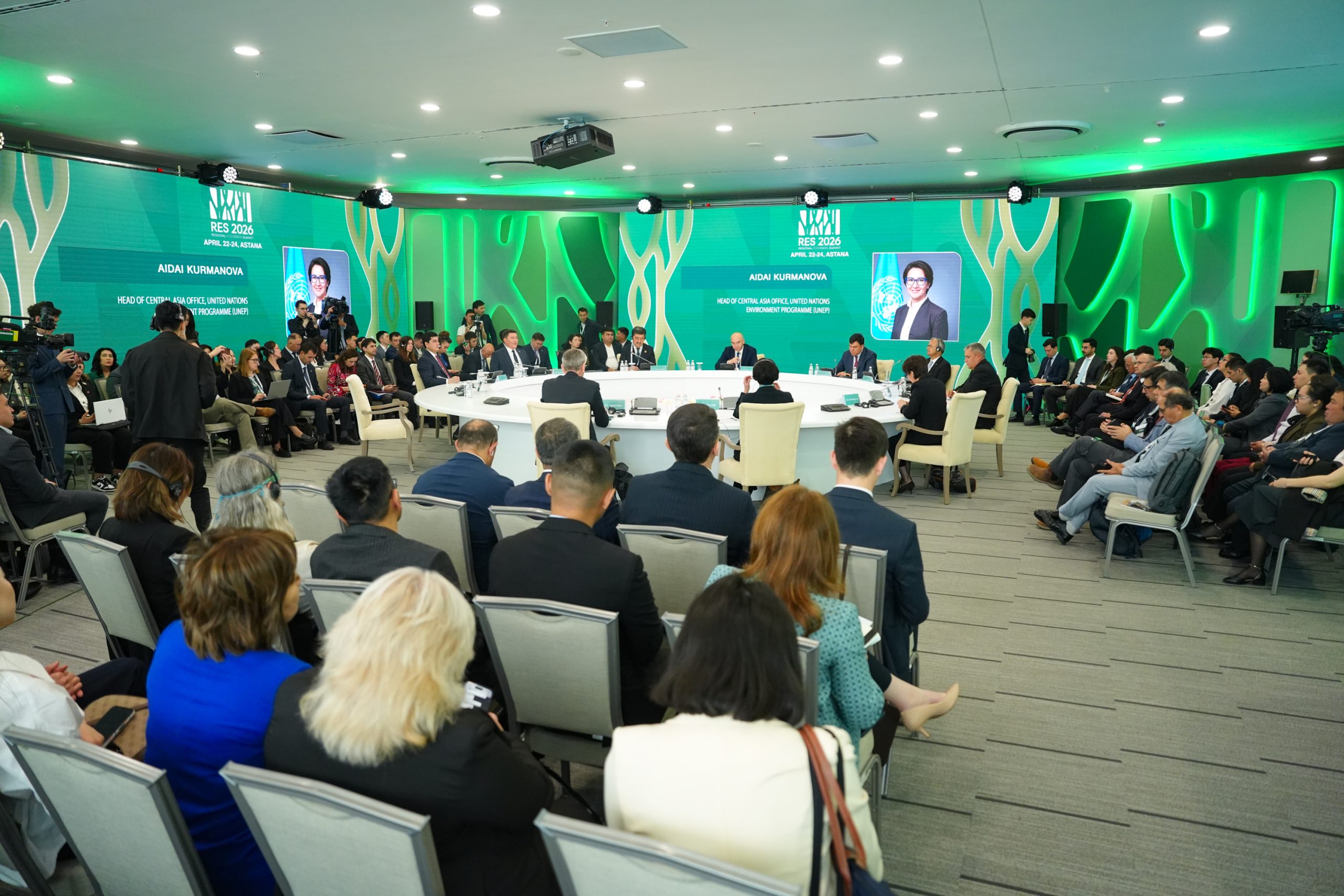
As part of the Regional Ecological Summit 2026, the first High-Level Dialogue on the Ecological Cooperation Platform within the Economic Cooperation Organization (ECO) was held. The event brought together representatives from Kazakhstan, Kyrgyzstan, Turkmenistan, Kyrgyzstan, Uzbekistan, and Türkiye, as well as the United Nations.
Central Asian countries face common ecological challenges that directly impact the sustainable development of our countries and the quality of life of our populations.
“Climate change, glacier retreat, water scarcity, land degradation, and biodiversity loss are already directly affecting the sustainable development of our countries and the quality of life of our populations. That is why ecological cooperation must remain a unifying agenda. Kazakhstan believes that within the ECO we have strong opportunities to advance joint ecological initiatives,” noted the Minister of Ecology and Natural Resources of the Republic of Kazakhstan, Yerlan Nyssanbayev.
Kazakhstan is actively engaged in ecosystem restoration and addressing the consequences of the Aral Sea crisis. The desiccation of the Aral Sea continues to have a serious impact on the environment and public health. Each year, up to 100 million tons of dust rise into the atmosphere, carrying salts and residues of toxic pesticides that pose a threat to the health of people living nearby.
On the instructions of the President of Kazakhstan, afforestation and land reclamation works are being consistently carried out on the dried seabed of the Aral Sea. Since 2021, saxaul planting has been carried out on an area of just over 1 million hectares.
“We also highly appreciate our cooperation with Uzbekistan in this area. The exchange of experience and technologies in phyto- and forest reclamation is already delivering practical results and demonstrates the importance of joint action,” the Minister noted.
More broadly, Kazakhstan is implementing a plan to plant 2 billion trees by 2027. A regional initiative, the “Green Shield of Central Asia,” is also planned for launch.
“Taking this opportunity, we invite ECO member states to join this initiative,” said Yerlan Nyssanbayev.
The second area of focus is the preservation of the Caspian Sea and the development of scientific cooperation.
In recent years, a steady decline in the level of the Caspian Sea has been observed. This creates serious ecological, economic, and social risks for the entire region. The preservation of the Caspian Sea must become a shared priority and a matter of long-term international cooperation. Since September last year, the Kazakh Research Institute of the Caspian Sea has been operating in Kazakhstan.
“We propose to combine the scientific potential of our countries to study the causes of the Caspian Sea’s shallowing, including climatic, hydrological, and anthropogenic factors. This approach will allow us to develop more coordinated measures for adaptation, preservation of marine ecosystems, and sustainable management of coastal areas,” the Minister noted.
The third area is the promotion of the circular economy and sustainable waste management.ECO countries have significant potential to advance this agenda, including within the regional RESCUE initiative launched in Baku on the sidelines of COP29. One of the key elements of a circular economy is a modern waste management system. In Kazakhstan, the Concept for the Management of All Types of Waste for 2026–2030 has been approved, providing for a transition from predominantly landfill disposal to a more modern and resource-efficient model.
“We see that our problems are largely the same. According to World Bank estimates, the damage caused by various climate-related factors currently amounts to 5% of regional GDP. This is a significant figure. We now have the opportunity to begin taking practical actions,” said Aziz Abdukhakimov, Advisor to the President of the Republic of Uzbekistan on Ecology and Chairman of the National Committee on Ecology and Climate Change.
Expected outcomes of the meeting include the preparation of a summary document reflecting the key points of convergence among participating countries, as well as the informal identification of priority thematic areas for further work within the ECO framework.
