
Team Europe Initiative – EU–Central Asia: High-Level Meeting on Water Resources, Energy, and Climate Change in Central Asia
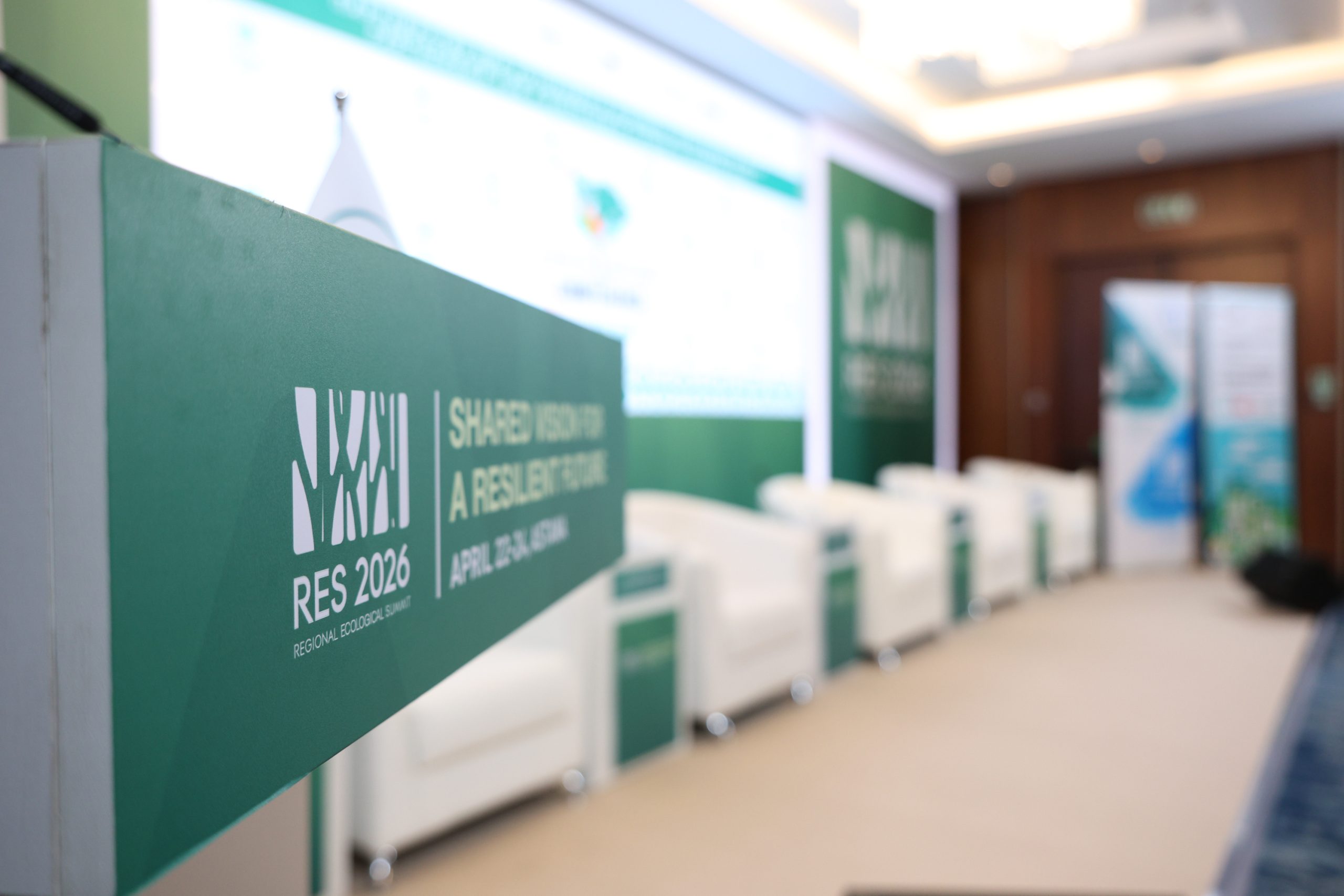
A meeting on water resources, energy, and climate change was held in Astana. The event brought together representatives of the European Union and ministers from relevant agencies of Central Asian countries.
The region is among the most vulnerable to climate change. According to international experts, by the end of the century, temperatures here may rise by 4 to 6 degrees Celsius. This poses direct risks to glaciers, water resources, agriculture, and the well-being of millions of people.
Kazakhstan is consistently strengthening its climate policy and considers the reduction of greenhouse gas emissions as one of its national priorities. The country has approved a Strategy to achieve carbon neutrality by 2060. By 2030, a 15% reduction in emissions is planned. With international support and climate financing, Kazakhstan is also aiming for a more ambitious target of 25%.
“In December 2025, Kazakhstan approved its updated Nationally Determined Contribution for the period 2026–2035. It envisages a 17% reduction in greenhouse gas emissions compared to 1990 levels. It is important for us that the data are transparent, comparable, and meet international standards. For Kazakhstan, as an exporter of energy resources, these issues are of strategic importance. This is especially relevant in light of new climate requirements of the European Union, including methane emissions regulation in the energy sector,” said Vice Minister of Ecology and Natural Resources of Kazakhstan, Nurlan Kurmalayev.
Kazakhstan is already working on developing national regulation of methane emissions, including the introduction of MRV systems and leak detection and repair mechanisms.
Alongside emission reduction, adaptation to climate change remains a priority for Kazakhstan.
Central Asia is already facing serious consequences of climate change, including water scarcity, desertification, and an increase in extreme weather events. In Kazakhstan, about 76.1% of the territory falls within zones of moderate or high sensitivity to desertification.
This requires a long-term and systematic policy in land use, afforestation, and ecosystem restoration.
Kazakhstan pays special attention to increasing forest area, sustainable use of forest resources, and protection of natural territories. Since independence, the country’s forest fund area has increased by 6.9 million hectares and now amounts to 31.4 million hectares. Forest-covered land has reached 14 million hectares, and forest coverage has grown from 3.8 to 5.1%.
In line with international commitments, Kazakhstan intends to further expand forested areas and increase this figure to 14.5 million hectares by 2030.
By order of the Head of State, Kazakhstan is implementing a large-scale program to plant two billion trees in the state forest fund. Since 2021, more than 1.6 billion trees have already been planted and sown.
Special attention is given to the Aral Sea region. The drying of the Aral Sea remains one of the most severe ecological problems in the region and directly affects public health, land conditions, and ecosystem resilience. Kazakhstan accounts for 2.8 million hectares of the dried seabed of the Aral Sea.
“One of the most effective solutions is afforestation of the dried areas with native plants, primarily saxaul, which helps stabilize soils and reduce the spread of salt and dust. Since 2021, Kazakhstan has planted saxaul on 1.1 million hectares. We also highly value cooperation with the Republic of Uzbekistan in jointly addressing ecological challenges in the Aral Sea region,” the Vice Minister said.
Another important step was the resolution “Green Shield of Central Asia,” initiated by Kazakhstan within the framework of the Regional Ecological Summit. This initiative aims to create a system of protective forest belts and green barriers that can reduce soil erosion, stabilize moving sands, and improve the regional microclimate.
Representatives of Central Asia expressed gratitude to the European Union for cooperation on climate change issues.
“Turkmenistan attaches great importance to international cooperation in environmental protection. We are an active participant in key international agreements and consistently advocate for the development of constructive dialogue on sustainable natural resource management, including cooperation within the Aral Sea basin. I would especially like to highlight cooperation with the European Union. It has been ongoing for several years. We feel that the results we are achieving now benefit not only Central Asian countries but also EU countries. They have also gained valuable experience and have begun to better understand the mentality of our Central Asian region,” said Makhtumkuli Akmuradov, Advisor on Ecological and Water Diplomacy at the Ministry of Foreign Affairs of Turkmenistan.
