
Session on the Economics of Water-Energy Cooperation in Central Asia under Climate Change Conditions
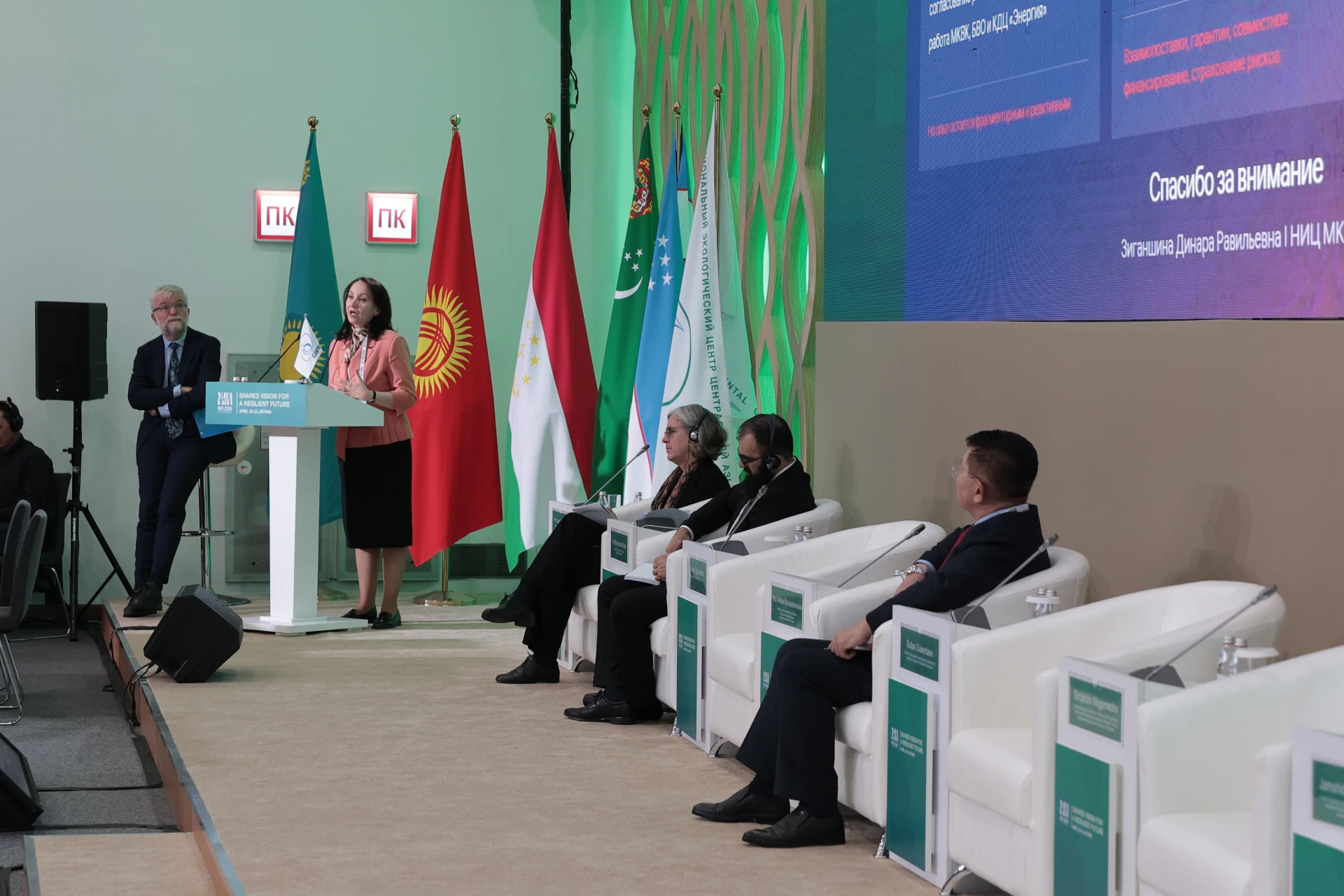
As part of the Regional Ecological Summit 2026, a thematic panel session was held on economic mechanisms for water-energy cooperation in Central Asia under climate change conditions.
The event brought together representatives of ministries and agencies responsible for energy and water resources in Kazakhstan, Kyrgyzstan, Tajikistan, and Uzbekistan, the Executive Committee of the International Fund for Saving the Aral Sea (IFAS), as well as international financial institutions and organizations, the private sector, the expert community, and civil society across the region.
Central Asia is one of the regions most affected by the impacts of climate change. In particular, the accelerated melting of glaciers is already altering river flow patterns in the region, while more frequent droughts and seasonal fluctuations in hydropower generation significantly increase food, energy, and economic risks for Central Asian countries.
At the same time, according to the World Bank, electricity demand in Central Asia could triple by 2050, while regional electricity trade currently accounts for only about 4% of total consumption. In this context, efforts by countries in the region to strengthen cooperation in electricity generation and transmission, as well as to expand exports beyond Central Asia, are becoming especially relevant.
In particular, the discussion placed special emphasis on a new ten-year program to establish the first regional electricity market in Central Asia (REMIT). This program, implemented by the countries of the region with financial support from the World Bank, aims to develop regional electricity trade, expand transmission capacity, and create the foundation for large-scale integration of renewable energy sources into the power systems of Central Asian countries.
