
Seminar “From Data to Action: Scaling the Waste Management Policy Support System and Circular Economy to Accelerate the Transition to Inclusive Waste Management”
Waste volumes are rapidly increasing worldwide. Nevertheless, many countries continue to face persistent challenges in effective waste management. This is driven not only by infrastructural or financial constraints, but also by limited data availability and gaps in national waste statistics.
One of the fastest-growing waste streams globally is electronic waste. It contains both valuable materials (gold, copper, rare earth metals) and hazardous substances which, if improperly disposed of, cause irreparable harm to the environment and human health.
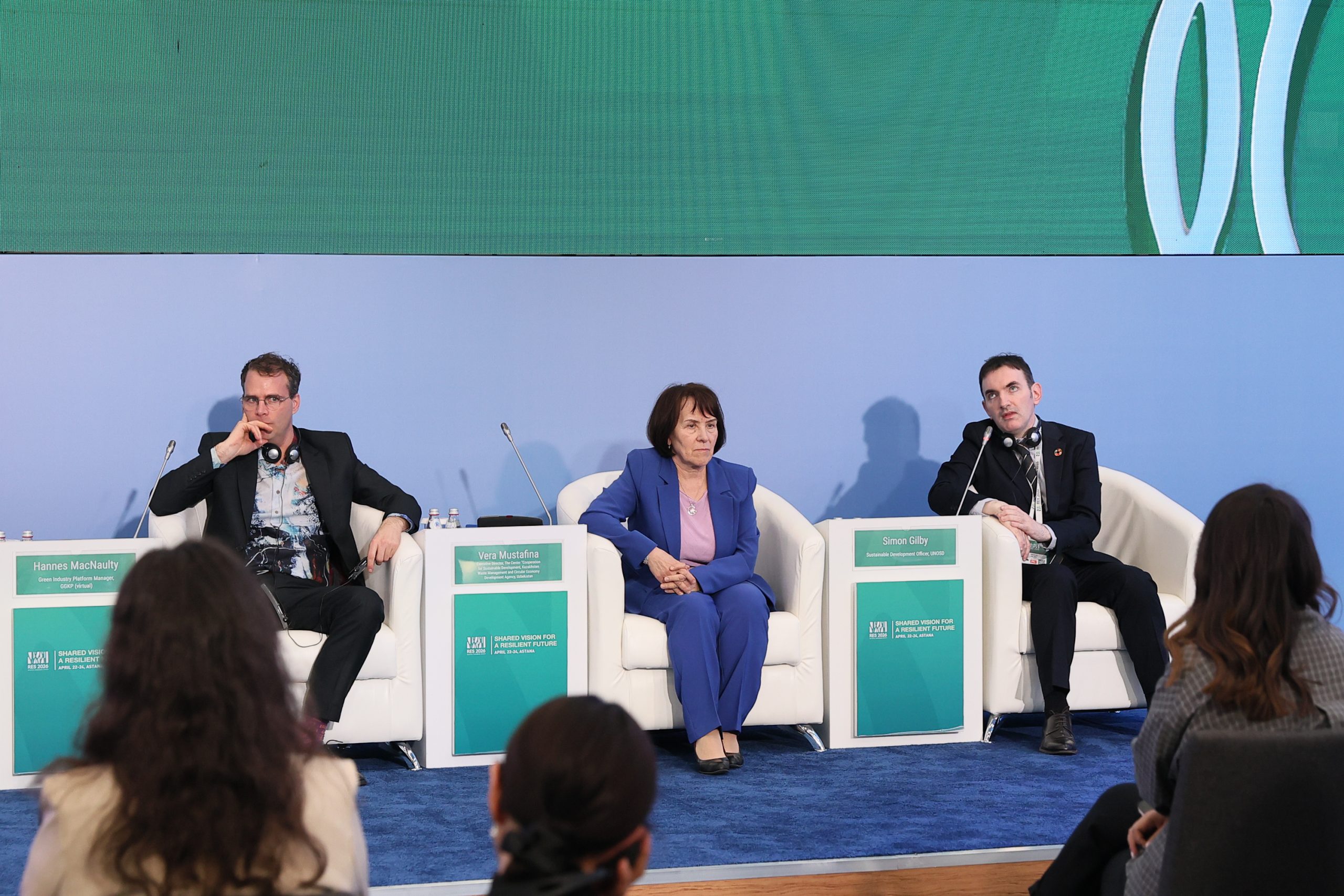
“The key challenge is the lack of accurate statistics. We cannot manage what we cannot measure. Many countries in the region have only approximate data on how much electronic equipment is imported, how long it is used, and where it ends up at the end of its life cycle,” noted UNOSD representative Simon Gilby.
During the seminar, digital solutions in the field of waste management were demonstrated. These tools are designed to help governments consolidate data, identify priority gaps, and translate assessments into actionable strategies and investment plans.
The Waste Management and Circular Economy Policy Support System (WMPSS) enables countries to move from recognizing problems to understanding how they can be effectively addressed. Countries can analyze their current position across the entire waste management lifecycle: from collection and recycling to disposal and the establishment of an enabling regulatory framework. The system transforms this assessment into concrete, prioritized recommendations: which laws should be strengthened, which gaps should be addressed, and which next steps would be most logical given the specific context of each country.
“I would like to specifically highlight the role of artificial intelligence in this process. The system uses AI to ensure that recommendations for each country are tailored to its unique situation. This is not just a generic to-do list, but a system that reflects the real conditions and priorities of the country. It takes into account the institutional and political landscape and is based on the latest research and policy data,” shared GGKP representative Hannes McNulty.
Participants of the seminar were also introduced to a UNITAR programme specializing in electronic waste monitoring. It includes inventory stocktaking: assessing the volume of equipment held by households and businesses. Flow analysis: tracking the pathway of devices from the point of sale to recycling or illegal dumping. Regional overviews: publishing reports that serve as a foundation for developing national legislation.
The seminar also featured the presentation of South Korea’s national online system Allbaro for monitoring, tracking, and managing the waste disposal process. It was designed to provide full control over the “lifecycle” of waste — from the moment of its generation to its final recycling or disposal.
