
RES 2026: New data on the impact of climate and environmental risks on the well-being of women and youth in Central Asia
Temperatures in Central Asia are rising faster than the global average, leading to more frequent extreme heat, glacier melt, and shrinking water resources. All of this creates significant risks and vulnerabilities for the region’s population. Recent research findings indicate that climate change is not only an environmental and/or economic issue—it directly affects people’s health and well-being, maternal safety, and in certain cases increases the risk of gender-based violence.
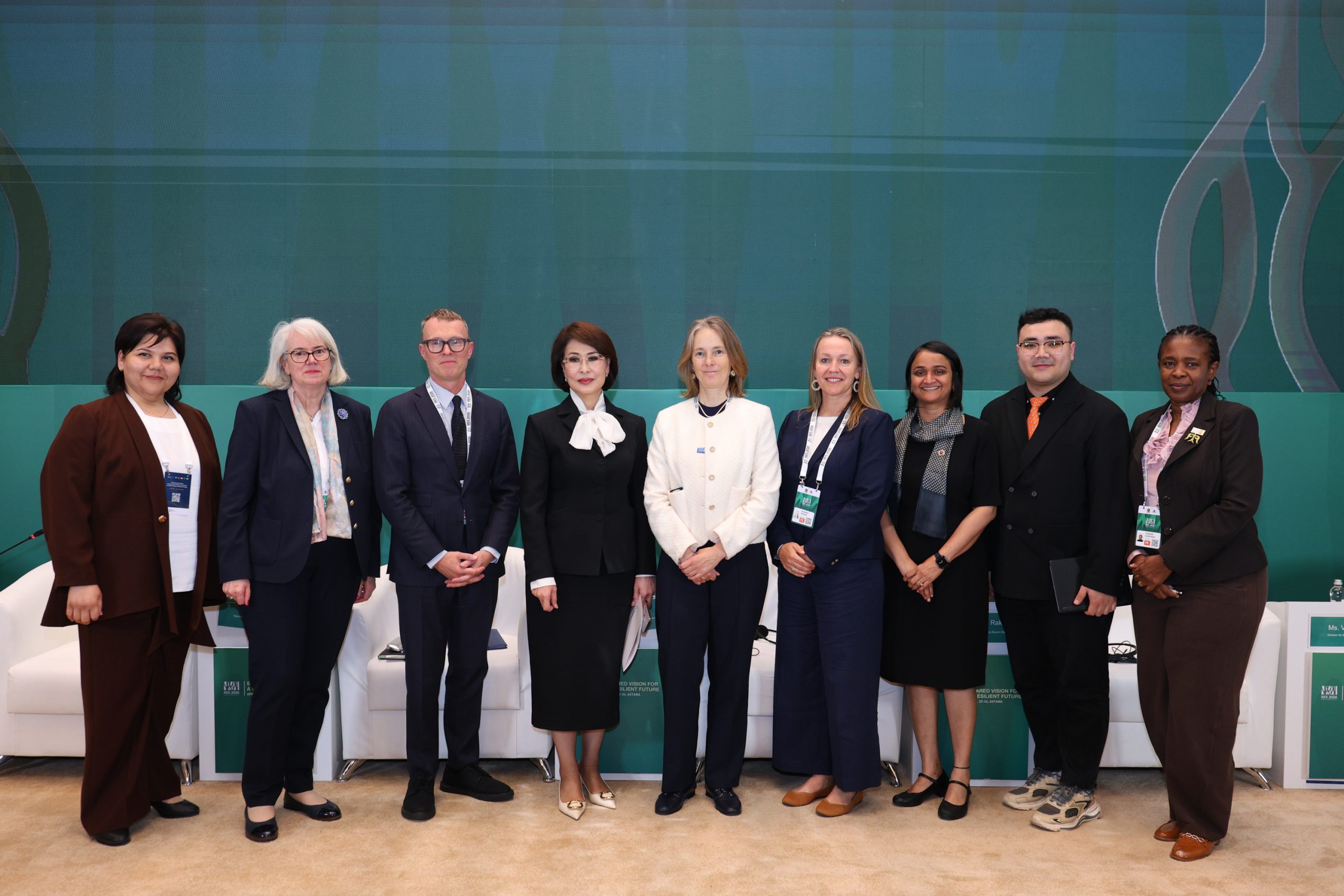
The United Nations Population Fund (UNFPA) held a thematic session at the Regional Ecological Summit in Astana to draw attention to the growing impact of climate change on the health and well-being of women and youth in the Central Asian region.
The session brought together representatives from academia, United Nations experts, development partners, and youth to advocate for urgent, data-driven actions that take into account the interconnections between climate, health, and gender equality.
Among other topics, the session reviewed research data on the direct and indirect effects of climate change on maternity, including negative outcomes such as anemia, eclampsia, low birth weight, preterm birth, and even pregnancy loss. Various studies show that if a woman is exposed to a 1°C increase in ambient temperature in the week before childbirth, the likelihood of stillbirth increases by 6%.
New studies conducted in Central Asia have revealed a significant correlation between hot days, air pollution, and increased maternal mortality, stillbirths, and rates of low birth weight in infants. However, major data gaps remain, highlighting the need for larger-scale regional studies to better understand the relationship between climate change and maternal and newborn health. Efforts are currently underway, including in Kazakhstan, to generate evidence to inform policies and programs in this area.
Central Asia has a large and rapidly growing young population: 51 million people under the age of 35, including 20 million women of reproductive age. This demographic trend is further reinforced by the rapid growth of the working-age population, which is projected to increase significantly by 2050. Youth, who make up a substantial share of the region’s population, are among the most influential drivers of solutions. Across Central Asia, young people are actively shaping responses to climate challenges through innovation, advocacy, and community engagement. Their experiences, perspectives, and ideas are critical for developing effective climate adaptation and mitigation strategies.
The RES session featured high-level presentations by experts from UNFPA, the World Health Organization (WHO), the Government of Kazakhstan, leading academic institutions, development banks, women leaders, and youth leaders. Scientific evidence on climate-related health risks will inform policy actions and transformation pathways needed to achieve resilience at individual, family, system, and societal levels in Central Asia. The evidence presented at the session will contribute to the global knowledge base beyond the region, including at the UN COP31 in Turkey.
