
Mountains and Climate Change: From Vulnerability to Sustainable Development
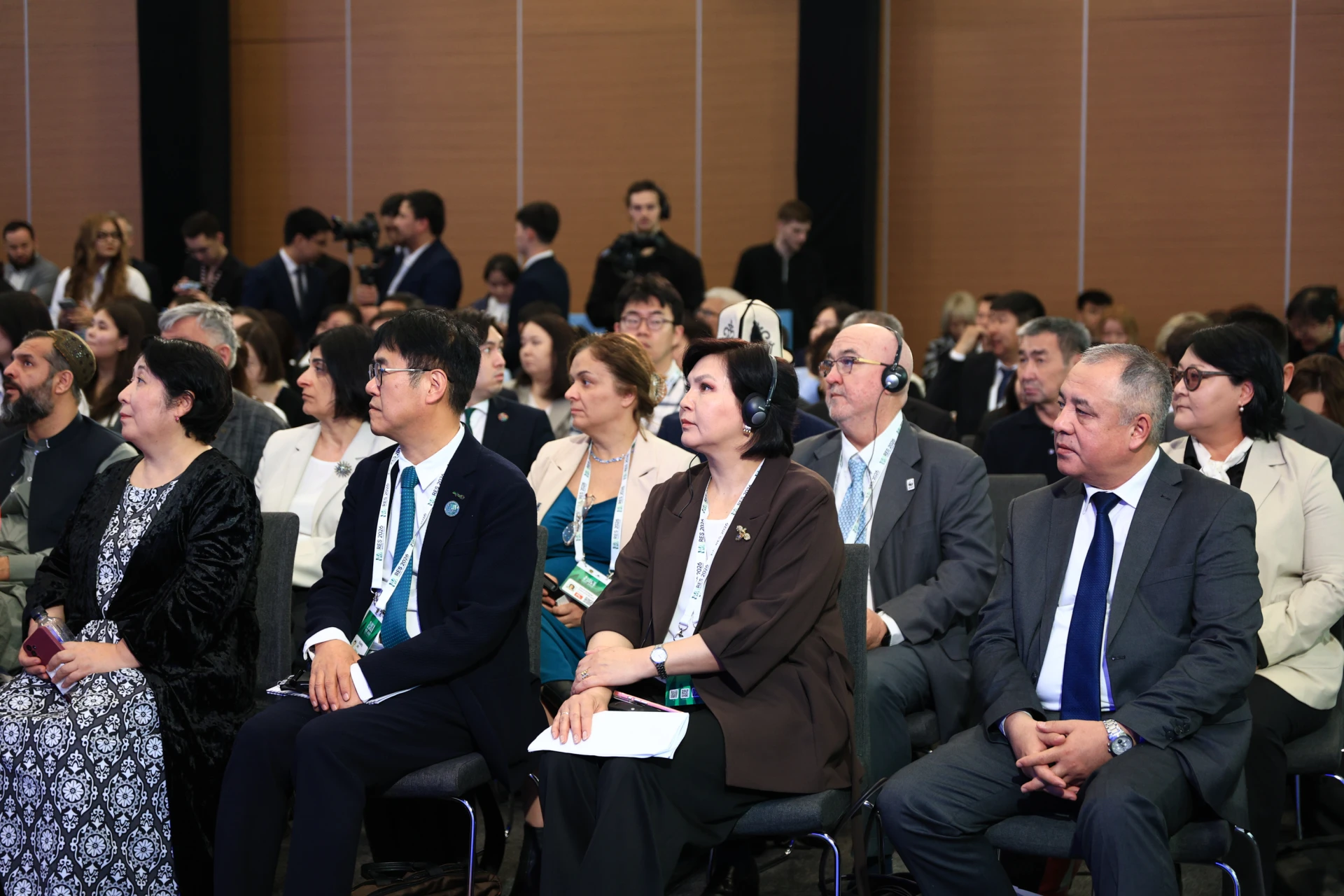
As part of the Regional Ecological Summit, a panel session titled“Mountains and Climate Change: From Vulnerability to Sustainable Development” was held. The event, organized by competent authorities Kyrgyz republic, broughttogether on one platform ministers of ecology from Central Asian countries, leadership of United Nations divisions, and leading experts from the World Bank to address a critical issue: how to protect mountain ecosystems that providefreshwater to more than half of the world’s population.
Mountain regions supply freshwater to over 50% of the global population, playing a key role in sustaining ecosystems and food security. At the same time, they remain among the most vulnerable to the impacts of climate change and facea significant funding gap within the international climate agenda.
The aim of the event is to promote the development of a comprehensiveapproach to the advancement of mountain regions in the context of climate change. Participants discussed ways to strengthen political attention to mountain issues, advance adaptation solutions and sustainable development mechanisms, andexpand international cooperation.
Despite the fact that mountains cover 27% of the Earth’s land area and playa crucial role in global food security, they remain among the most vulnerable to climate shocks and are chronically underfunded within global ecological programs.
Participants of the session emphasized that the accelerated melting ofglaciers, soil degradation, and the increasing frequency of natural disasters in theregion — from mudflows to floods — require an immediate shift from riskacknowledgment to active investment in resilience.
Under the facilitation of Bakyt Dzhusupov, coordinator of the Organization for Security and Co-operation in Europe, heads of environmental agencies fromKyrgyzstan, Kazakhstan, Tajikistan, Turkmenistan, and Uzbekistan discussed thelack of political attention to the needs of mountain communities and the necessityof forming a unified regional front at upcoming United Nations internationalconferences (COP).
Special emphasis during the discussion was placed on mobilizing climatefinancing. Speaking to colleagues, Inger Andersen, Executive Director of theUnited Nations Environment Programme, and Valerie Hickey, Global Director ofthe World Bank, noted that Central Asia has the potential to become a leader inadvancing adaptation technologies if partnerships within the Global MountainResilience Center are strengthened.
The outcome of the session was the development of a set ofrecommendations for international platforms aimed at recognizing mountains aspriority areas for climate investment. The organizers, represented by the Ministryof Natural Resources of the Kyrgyz Republic and the Climate Finance Center, emphasized that this meeting should serve as a starting point for creatingmechanisms of direct technological and financial support for mountain regions, enabling their transformation from zones of risk into zones of sustainable growth.
