
Dialogue on the Tehran Convention: Strengthening Cooperation for the Caspian Sea
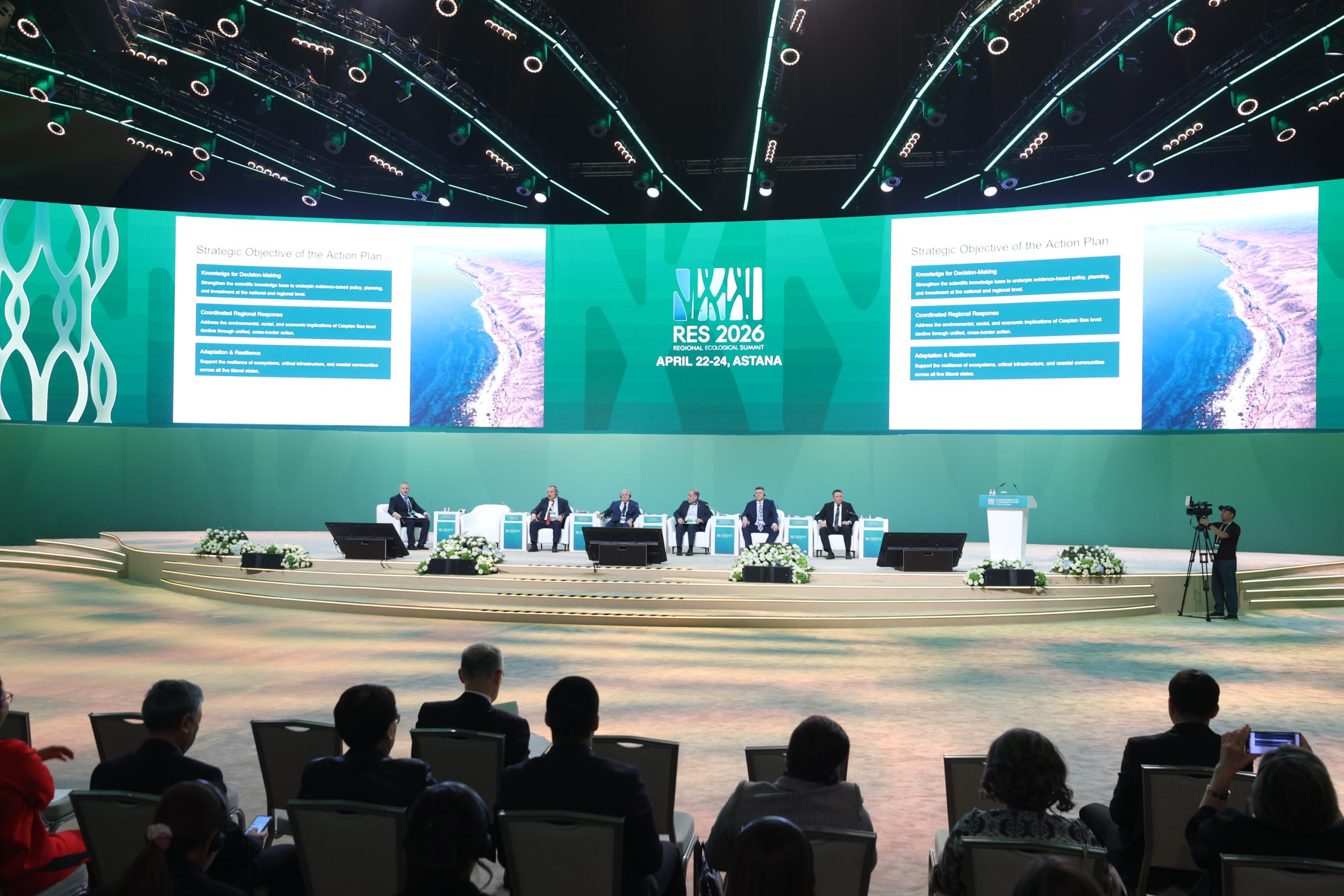
As part of the Regional Ecological Summit in Astana, a panel session titled “Dialogue on the Tehran Convention: Strengthening Cooperation for the Caspian Sea” was held.
The event brought together high-level officials, experts, and representatives of international organizations to discuss critical environmental challenges facing the region.
The central topic of discussion was the catastrophic decline in the sea level, which has dropped by approximately 2 meters since the 1990s. Participants emphasized that the Tehran Convention remains the foundation for developing joint solutions, including the ambitious Action Plan of the Caspian littoral states on fluctuations in the Caspian Sea level for 2026–2036.
Vice Minister of Ecology and Natural Resources of the Republic of Kazakhstan, Zhomart Aliyev, highlighted that preserving the unique ecosystem is a shared priority for the five Caspian states. He noted the importance of the initiative by the President of Kazakhstan, Kassym-Jomart Tokayev, to develop a comprehensive interstate program.
“Today, the Caspian is facing serious challenges: sea level changes, ecosystem degradation, and pollution. These processes affect the interests of all Caspian countries and require coordinated, science-based, and long-term solutions. The Tehran Convention remains the primary legal and institutional mechanism for our cooperation. A sustainable future for the sea is only possible through close collaboration among Azerbaijan, Iran, Russia, Turkmenistan, and Kazakhstan,” said Zhomart Aliyev.
Deputy Secretary-General of the United Nations and Executive Director of the United Nations Environment Programme, Inger Andersen, described the situation in the Caspian as both an ecological and humanitarian crisis threatening food security and the livelihoods of millions. She urged countries not to give in to despair but to use the Tehran Convention as a platform for decisive action.
“The Caspian Sea is in trouble. But we should not choose despair. I believe this meeting is exactly why we can choose hope. The Tehran Convention—the only legally binding regional framework—will be critical. I urge all member states to work toward finalizing the 2026–2036 Action Plan, which should become a real roadmap. It is important to begin implementation without delay,” emphasized Inger Andersen.
Participants agreed on the need to develop unified forecasting models and strengthen data exchange. Another key objective of the Dialogue was to mobilize funding from international financial institutions for environmental projects. The possibility of transforming the current Action Plan into a broader long-term interstate program was also discussed.
The implementation of the outlined strategies is expected not only to stabilize the ecological situation but also to strengthen trust among regional countries, ensuring sustainable development of the Caspian basin for decades to come.
About the Tehran Convention: The Framework Convention for the Protection of the Marine Environment of the Caspian Sea (Tehran Convention) is the first legally binding document signed by all five Caspian littoral states, aimed at preventing pollution and preserving the region’s biodiversity.
