
Challenges of Drying Seas and Lakes Discussed in Nairobi
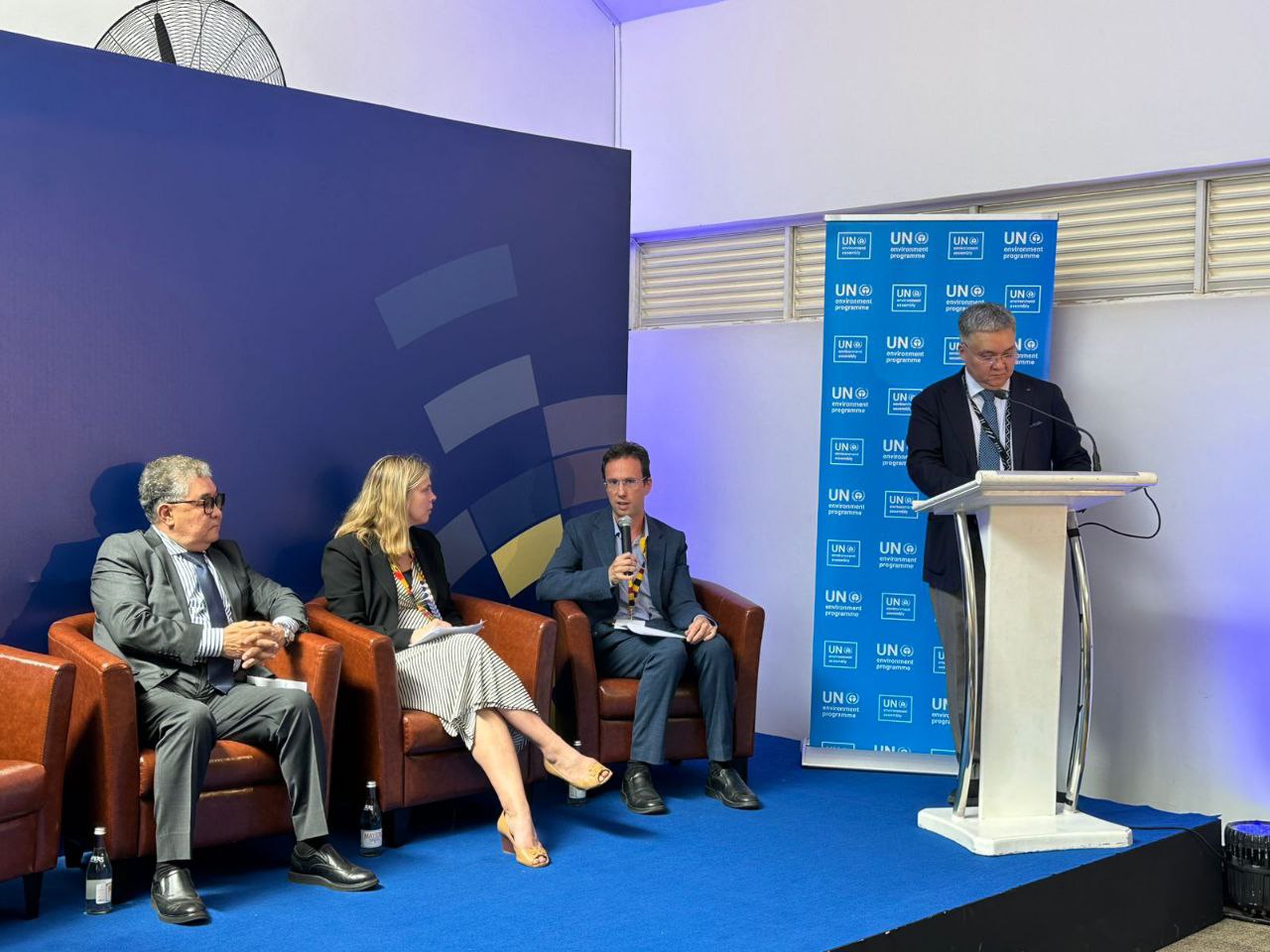
During the seventh session of the United Nations Environment Assembly (hereinafter – UNEA-7), held from 8 to 12 December at the headquarters of the UN Environment Programme in Nairobi, a side event titled “Drying Seas and Lakes – A Global Catastrophe of the 21st Century” was convened. The event, co-organized by the Project Office for Central Asia on Climate Change and Green Energy of the Central Asia Climate Foundation (hereinafter – CACF), brought together representatives of government bodies, international organizations, and the expert community, who emphasized the urgency of the issue and the need to strengthen cooperation between countries and regions to exchange knowledge, best practices, and innovative solutions in ecosystem restoration and integrated water resources management.
The event was attended by representatives of environmental agencies from various countries, senior leaders of UNEP, UNECE, and the Secretariat of the Ramsar Convention, financial institutions, research centers, and experts.
The session was moderated by a representative of CACF.
During the discussion, participants noted that Central Asia is currently facing the consequences of the degradation of the Aral Sea and the declining water level of the Caspian Sea. Similar processes are occurring in other regions of the world – Lake Chad in Africa, Lake Poopó in South America, and numerous inland water bodies across Europe and Asia. These examples demonstrate that large-scale drying of seas and lakes is one of the major environmental challenges of the 21st century and underscore the urgency of uniting efforts to find effective solutions.
The One Water Summit, held in 2024 in Saudi Arabia, initiated a global dialogue on integrated water resources management and ecosystem resilience. Co-chaired by Kazakhstan and France, the summit marked an important milestone in advancing ecosystem-based and climate-oriented approaches to water governance. It also launched the One Water Vision, a collaborative initiative involving an international coalition of 20 scientific institutions, international organizations, and space agencies.
The UNEA-7 side event became a key stage in advancing the role of water within the global climate and environmental agenda, as well as in supporting the achievement of Sustainable Development Goal 6: “Ensure availability and sustainable management of water and sanitation for all.” The event served as a strategic bridge toward the 2026 UN Water Conference in the UAE and the 2026 Regional Ecological Summit in Kazakhstan, where Central Asian countries are expected to consolidate their efforts to address climate and environmental threats.
The side event also examined regional challenges and opportunities related to the degradation of lakes and seas in Africa and Central Asia, with a focus on integrated transboundary actions for ecosystem restoration and strengthening community resilience. Special attention was given to integrated water resources management and nature-based solutions – such as wetland restoration and reforestation in river basins – as practical tools for adaptation and increasing resilience.
As previously reported, the Regional Ecological Summit is scheduled to take place in Astana on 22–24 April 2026, where environmental challenges faced by Central Asian countries and possible solutions will be discussed.
