
CACCC. Water Resources Management with Consideration of Climate Impact
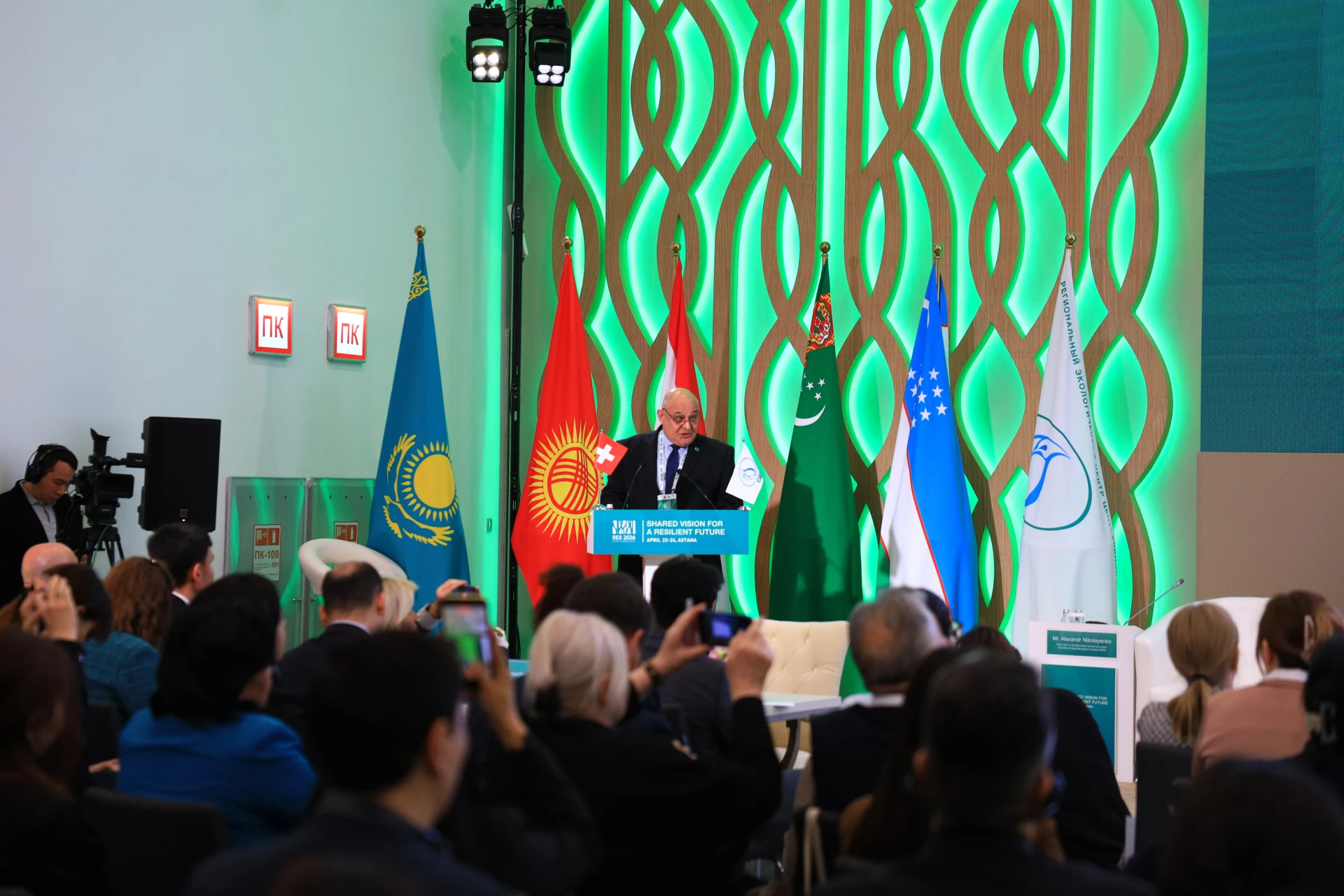
In Astana, as part of the Regional Ecological Summit 2026, experts discussed key challenges in Central Asia related to climate change and the decreasing availability of water resources. Representatives of Central Asian countries and international experts identified priority areas and joint solutions to strengthen water cooperation, improve the efficiency of water resource management, and develop institutional, technical, and financial mechanisms in the region adapted to climate challenges.
In 2025, Kazakhstan adopted a new Water Code, which establishes modern management principles. The concepts of “water security” and “environmental flow” were introduced, and emphasis was placed on the economic value of water.
“In conditions of decreasing water availability, the priority is not to increase water withdrawal, but to improve water use efficiency. Today, state support for the implementation of water-saving technologies reaches up to 80% of costs”, - said Vice Minister of Water Resources and Irrigation of the Republic of Kazakhstan, Talgat Momyshev.
By 2030, the application of these technologies is planned to expand to more than 1.3 million hectares, which will reduce water consumption in agriculture by up to 30%, or 2.2 million liters of water.
Kazakhstan is developing a national water resources information system integrating data on surface and groundwater. By the end of the current year, more than 6,000 canals are planned to be digitized. This will allow a transition from reactive to predictive water resource management.
The next direction is integrated management and intersectoral coordination. In the context of climate change, the interconnection between water, energy, and agriculture is intensifying. Kazakhstan is consistently implementing the “Water — Energy — Food” approach to balance interests.
The region’s water resources are transboundary in nature, and climate change affects all countries without exception.
“The development of joint monitoring and data exchange systems, the formation of climate-resilient and sustainable infrastructure, coordination of water and energy policy, implementation of unified approaches to water conservation, and the use of scientific data and scenario analysis are of particular importance. We are convinced that data, trust, and joint planning should become the foundation for effective adaptation to climate change”, - noted Talgat Momyshev.
He also emphasized the importance of the Global Water Partnership initiative in Central Asia, which creates a platform for moving from dialogue to practical solutions and contributes to the formation of sustainable mechanisms for transboundary cooperation.
For more than 30 years, Switzerland has supported water resource management projects in Central Asian countries.
“Currently, our efforts in the water sector are reflected in the Swiss Cooperation Program for Central Asia for 2026–2029, where more than half of our $200 million budget is allocated to the water sector. Since 2017, Switzerland has been particularly involved in implementing its flagship initiative Blue Peace Central Asia, aimed at strengthening regional coordination in the management of transboundary water resources”, - said Tobias Werder, a representative of the Swiss government.
As a result of the session, coordinated regional recommendations were developed to promote climate-resilient water resource management in Central Asia.
