
2nd High-Level Regional Dialogue on Air Quality Improvement Policies in Central Asia
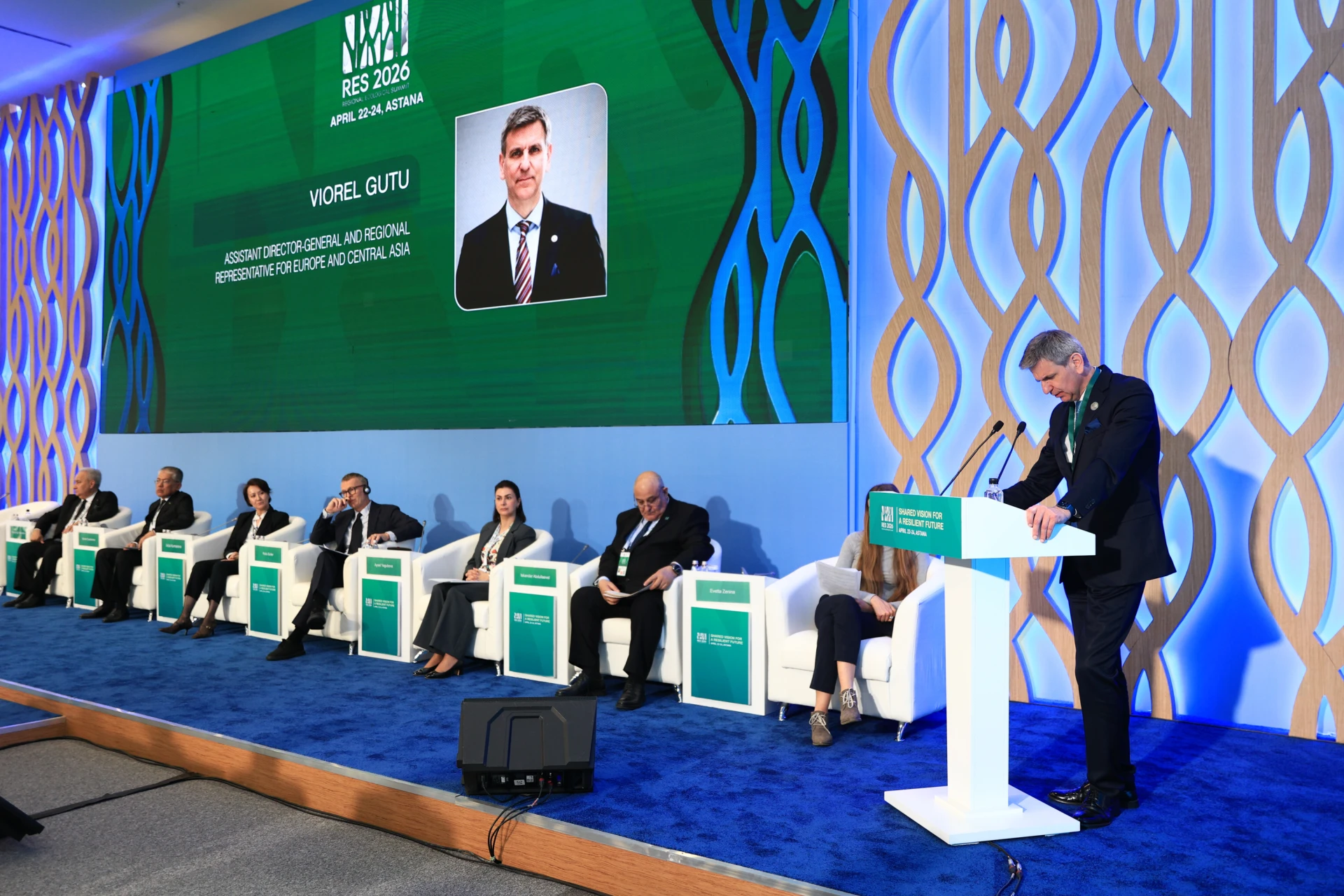
The first high-level regional policy dialogue on clean air measures in Central Asia was held in June 2024 in Tashkent, while the second dialogue brought together environmental ministers in Astana.
The event was opened by the Advisor to the President of the Republic of Uzbekistan on environmental issues – Chairman of the National Committee on Ecology and Climate Change, Aziz Abdukhakimov. He spoke about the first steps Uzbekistan has taken to improve air quality in Tashkent. Over the past year, the operations of more than 100 enterprises were suspended for violating environmental requirements and using coal. A special commission has been established to monitor compliance of industrial facilities with environmental standards.
A total of 87 environmentally hazardous and energy-intensive enterprises have been identified, which will be gradually relocated outside the capital. In Tashkent, the first five industrial enterprises have already ceased operations. Metallurgical plants have been relocated to industrial zones in the Jizzakh region equipped with new technologies.
“Starting from April 1, 2026, an indefinite moratorium has been introduced on the creation of new industrial zones in Tashkent. The use of motor fuel below AI-92 grade has been banned. An ecological transport system has been launched, providing for vehicle regulation based on emission levels and the phased establishment of entry zones into environmentally sensitive areas of the city,” said Aziz Abdukhakimov.
Valerie Hickey, Director for Environment at the World Bank Group, noted that Central Asian countries are investing in infrastructure, particularly in monitoring and evaluation.
“Cleaning the air is not only about saving lives, it is about modernizing the economy. It ensures that products manufactured in Central Asia can be exported to premium markets. It guarantees that clean and “green” technologies contribute to economic efficiency, innovation, and the development of modern economies that these countries are capable of building”, - said Valerie Hickey.
Minister of Ecology and Natural Resources of the Republic of Kazakhstan, Yerlan Nyssanbayev, emphasized that Kazakhstan considers air quality a key element of environmental safety, sustainable development, and the quality of life of its citizens.
He recalled that Kazakhstan adopted new environmental legislation in 2021. First-category enterprises are being transitioned to new conditions — obtaining IEPs (Integrated Environmental Permits). This process involves modernization of production and the introduction of new technologies. Around 20 enterprises have already obtained such permits, while another 20 are in the process of submitting documentation. Starting next year, a large-scale decade-long effort to modernize industry will begin.
Air quality and global warming are issues that affect us all. In Central Asia, these processes are sometimes even more intense than in other regions.
“We are joining forces and developing programs, but I call on international organizations to take a more active role in this process. Without attracting external financial resources, it will be very difficult to achieve all the set targets, despite significant funding already being allocated by our governments and the private sector. We have inherited a heavy legacy from the Soviet era — outdated technologies that require time and substantial investment to replace”, - the minister noted.
